









Rural cultural axis in the era of Green Agriculture
Rural culture combined with modern technology is the core solution for Vietnamese agriculture to address environmental challenges and achieve sustainable breakthroughs in this era of development.
The paradox of production practice
Throughout the nation’s history, agriculture has never been merely an economic sector; it is the root, the very lifeblood, and the very identity of the Vietnamese people. For those long-time involved in agriculture, many have undoubtedly wondered: Why, despite billions of dollars in exports, are farmers still not truly secure, and why do our fields continue to suffer from pollution

And the answer lies not only in technology or investment capital, but in the disconnect between economic development and the preservation of ecological and cultural values. Looking back at the beginning of 2026, Vietnamese agriculture continues to affirm its position as the “pillar” of the economy. Amidst the turbulence of the global market, the agricultural sector has maintained its growth momentum, ensuring food security for 100 million people and setting new export records.
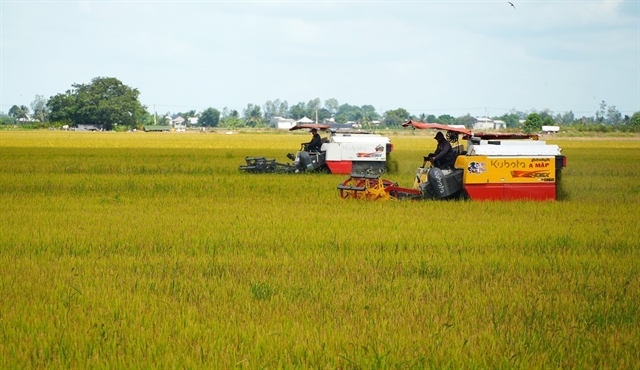
In particular, the Mekong Delta, the country’s rice granary with over 2.6 million hectares of agricultural land, continues to contribute over 50% of the national rice production and 70% of the national aquatic product output. Here, rice is not only a strategic crop but also a cultural symbol closely intertwined with the lives of the people.
However, behind this brilliant success lies a rather high environmental price. For decades, we have pursued production targets at all costs. To boost productivity, farmers are caught in a vicious cycle of chemical fertilizers and pesticides. This dependence leads to soil compaction, toxin accumulation, and a severe decline in biodiversity.
Furthermore, the issue of agricultural waste is a thorny problem. Every year, millions of tons of straw and rice husks are burned directly in the fields, causing air pollution and depleting valuable organic matter that should be returned to the soil. From an environmental management perspective, it is necessary to recognize that traditional rice cultivation with its continuous flooding regime is a major source of methane emissions. Vietnam committed at COP26 to reducing global methane emissions; this presents both pressure and opportunity to restructure the agricultural sector towards a green and sustainable direction.
Reviving rural culture in production will keep the fields green forever.
From a strategic perspective, rural culture is likened to an “undercurrent” of knowledge that has enabled farmers to engage in dialogue with nature for thousands of years. This is the foundation for the agricultural sector’s breakthrough. Instead of relying on chemicals, restoring a lifestyle that cherishes nature helps farmers create clean production models, keeping pace with the carbon credit trend.

Before the “chemical revolution” swept across the fields, our ancestors cultivated according to the principles of a circular economy, from “nourishing the soil” with green manure and composted animal manure to water conservation and crop rotation to naturally control pests and diseases. Vietnamese farming culture considers “the land as mother” and “water as blood.” This attitude of cherishing nature was once the strongest barrier preventing acts of environmental destruction.
Restoring rural culture is not about returning to the rudimentary plow and buffalo. It is about using the ecological knowledge of our ancestors as a foundation, combined with modern technology, to create a new image that is “greener and more responsible.”
In reality, promising models have emerged. In the Mekong Delta, the “1 million hectares of high-quality, low-emission rice” project represents a revolution in thinking. The “1 must, 5 reductions” process, combined with the “alternating wet and dry irrigation” (AWD) technique, has helped farmers reduce input costs by 30-40%, significantly increasing profits while drastically reducing greenhouse gas emissions. In highland areas, organic farming models linked to geographical indications are reviving valuable native plant varieties, creating complete circular cycles.
In particular, the emergence of carbon credits is becoming a new economic driver. When environmental protection has the potential to become a new source of income, farmers will earn additional income from their own civilized actions.
For agriculture and the environment to truly harmonize in the nation’s “era of progress,” we need a comprehensive strategy with people as the main actors. Firstly, we need to shift from “agricultural production” to “agricultural economics.” We shouldn’t just look at output but also at added value. A kilogram of clean, carbon-free rice, carrying the cultural story of the land, will be worth many times more than mass-produced rice. We need to train a generation of “knowledgeable farmers,” people who know how to use smartphones to trace the origin of produce but also know how to “listen” to the breath of the soil to fertilize at the right time.
Secondly, policies must permeate culture and communities. The state needs to encourage farmers’ associations and new-style cooperatives where the cultural values of farming are honored. Financial mechanisms must prioritize supporting ecological agriculture and protecting the rural environment. Thirdly, technology should be used as a tool to implement the green aspiration. Digital maps of soil, early warning systems for drought, salinity, or disease outbreaks will help agriculture adapt more proactively to climate change, avoiding waste and pollution.
Finally, we must build brands based on identity, because today’s world doesn’t just buy agricultural products; they buy “value.” If we can prove that Vietnamese rice is grown with love for the land and responsibility for the future, we will never have to worry about the word “rescue”.

Agriculture and the environment are two sides of the same coin. When agricultural culture is properly positioned, environmental protection becomes a self-driven need for every family and every village. This is not just a technical problem, but a profound cultural movement. Let each field be not only a place for food production, but also a vibrant ecological and cultural space, so that Vietnam can confidently enter a new era as a green, prosperous, and distinctive agricultural powerhouse.
The future of Vietnamese agriculture does not lie in our ranking in terms of production volume, but in our standing in terms of credibility and responsibility towards the planet. Each field must be a cultural space, and each citizen must be an environmental ambassador. When we protect the environment, we are protecting the greatest asset of our lives and the future of our children and grandchildren. Let us together close the era of resource depletion and usher in an era of sustainable breakthroughs, where Vietnamese agriculture shines with its unique values and the mindset of a responsible nation.
“Vietnamese agriculture is at a historical turning point: shifting from a production-oriented mindset to an economic one, from prioritizing output to prioritizing green value. We cannot enter an era of national resurgence with a resource-depleted agricultural sector. The solution lies not only in machinery or digital technology, but in awakening the “undercurrent” of indigenous knowledge. When the millennia-old knowledge of our ancestors is empowered by modern technology, we will create a sustainable agricultural ecosystem where each agricultural product carries a message of responsibility and identity.”
Vo Van Hung, Deputy Minister of Agriculture and Environment, according to the Agriculture and Environment Newspaper.