









This article is the second installment of In Conversation, a series of interviews with the people leading our Responsible Sourcing Initiative projects on the ground.
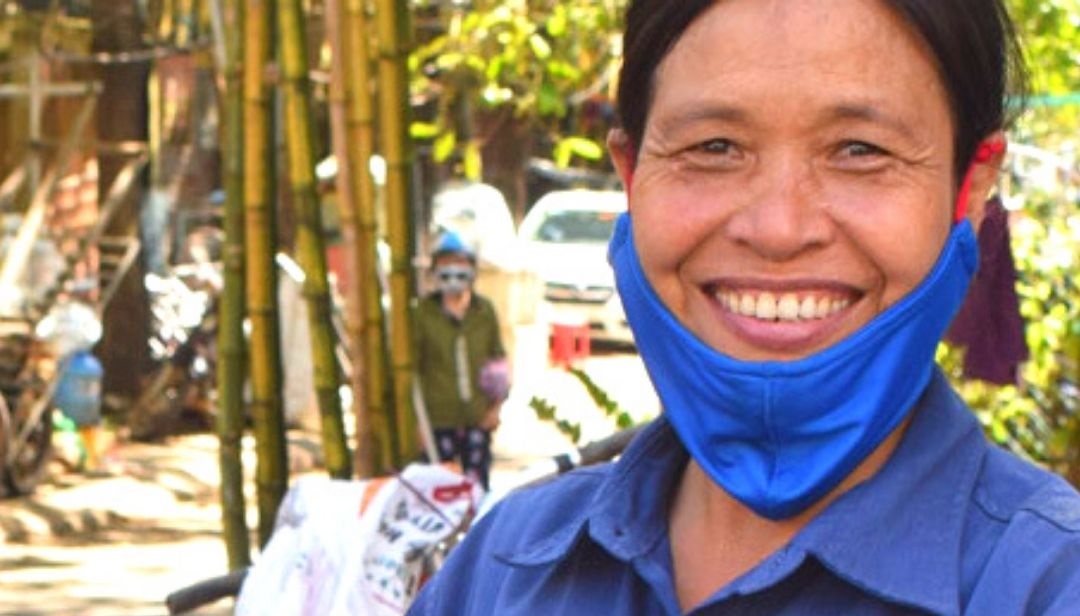
Viet Nam’s recycling value chain relies heavily on informal waste sector workers who collect, sort, and move recyclable materials into the recycling system. The informal sector – up to 90% of whom are women – collects over 30% of recyclable plastic, keeping the country clean and helping reduce cleanup and waste management costs.1 Yet, despite keeping the system afloat, these actors operate within a highly informal and fragmented network. Junk shops (Tier 3) and small junk shops/informal waste pickers (Tier 4) are geographically dispersed, with many being family-run, cash-only businesses that often have limited formal documentation, access to finance, and health protection, and may not fully comply with safety and environmental standards. Informal waste pickers at the bottom of the value chain frequently lack access to social protection, including social, health, and labor insurance.
Since 2024, the Responsible Sourcing Initiative has been working with the United Nations Development Programme (UNDP) in Viet Nam to protect the lives of informal waste sector workers and strengthen responsible sourcing in Duy Tan Recycling’s value chain in Ho Chi Minh City.
To learn more about the project’s progress and early lessons, we spoke with Hoang Thanh Vinh, Waste and Circular Economy Program Analyst from UNDP Viet Nam, the organization leading the project implementation, and Madhu Narayan, Responsible Sourcing Initiative Director.
Tell us about some of the findings from the baseline assessment for this project.
Vinh: Our baseline assessment was conducted in late 2024 with our recycling partner, Duy Tan Recycling, one of the biggest recyclers in the south of Viet Nam. Their value chain includes large aggregators (Tier 2), junk shops (Tier 3), and smaller junkshops/informal waste pickers (Tier 4).2
From the assessment, we found several vulnerabilities across the lower tiers of the recycling value chain. Many workers had limited access to health protection and occupational safety measures, while some Tier 2 and Tier 3 facilities faced sanitation and infrastructure issues affecting working conditions, including flooding, slippery working areas, poor roofing, and exposure to pollution, heat, and moisture. We also saw structural barriers beyond the workplace: many junk shop owners lacked transaction histories and formal financial records, while some were hesitant to share information because of concerns around legal and tax compliance. Fluctuations in the market price were also a common challenge that prevented consistent, timely, and fair pricing.
Just as importantly, the assessment highlighted the gap in opportunities to feature the voices of informal and formal waste workers in official channels to advocate for their rights, recognition, improved working conditions, and meaningful participation in policy and decision-making processes.
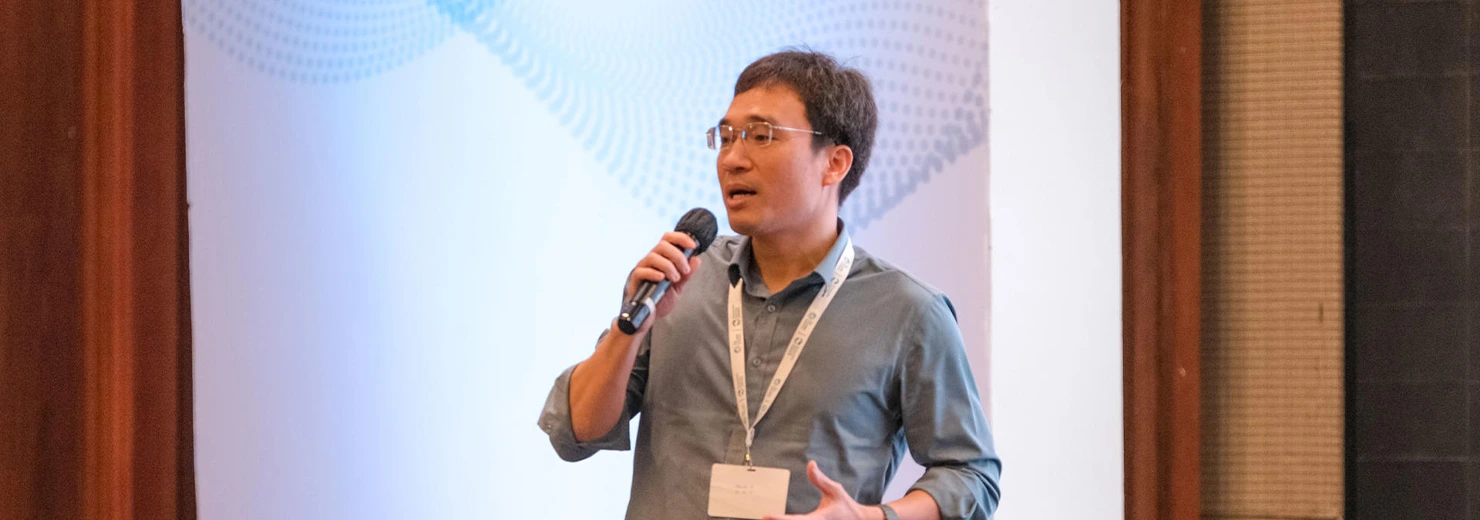
Hoang Thanh Vinh presenting the Viet Nam project at the Responsible Sourcing Initiative Annual Convening 2025.
What remediation and mitigation solutions were identified in response to these findings?
Vinh: Based on the baseline assessment and input from the value chain actors, we focused the intervention on providing health and insurance packages, improving Water, Sanitation, and Hygiene (WASH) infrastructure, providing workplace safety training and protocols, providing information and knowledge on business registration and tax documentation, improving financial assessments, and developing the priority suppliers’ improvement plans.
Firstly, we upgraded sanitation and infrastructure at two Tier 2 facilities and eight Tier 3 junk shops to improve working conditions, reduce flooding and slip risks, and help protect recyclable materials from moisture damage.
Secondly, we provided training and workshops on business registration and tax documentation for aggregator owners, junk shop owners, and waste workers. One junk shop owner in Tiền Giang province shared with us, “The project not only taught me about tax. It also showed me that I can follow the proper procedures without being afraid. I hope the project will continue to expand so that other junk shop owners can benefit the way I have.”
Thirdly, we are currently working with Duy Tan Recycling to integrate responsible sourcing practices outlined in the Harmonized Responsible Sourcing Framework for Recycled Materials (Harmonized Framework) with their existing supplier management system to identify practical areas for improvement and support the integration of responsible sourcing practices into routine supplier management processes.
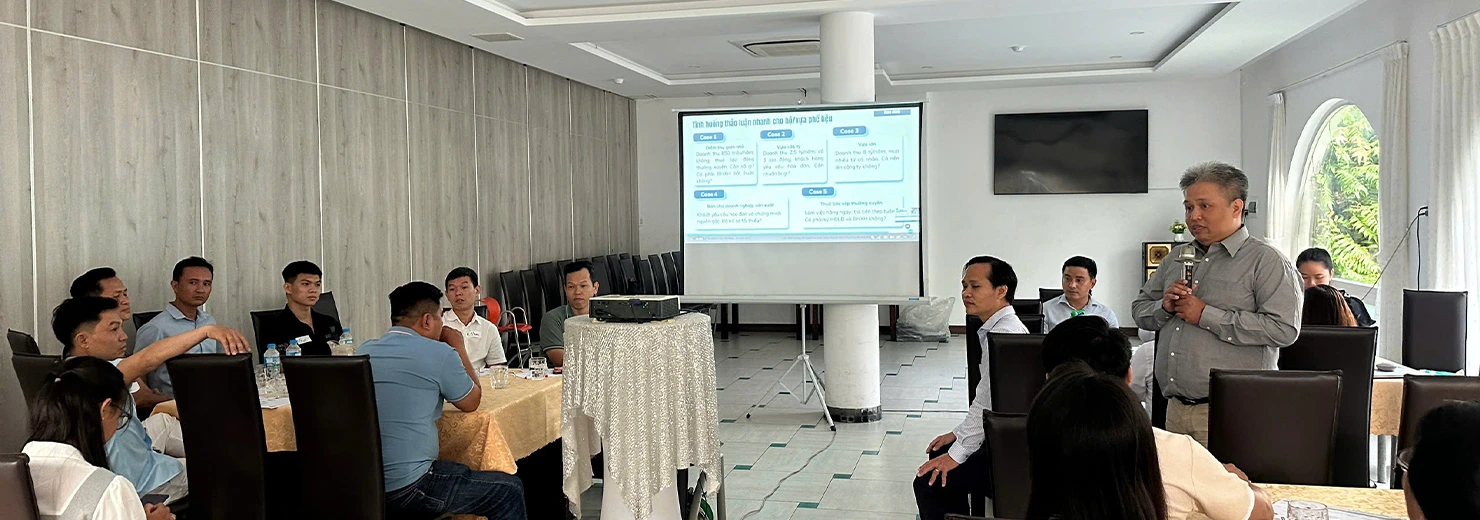
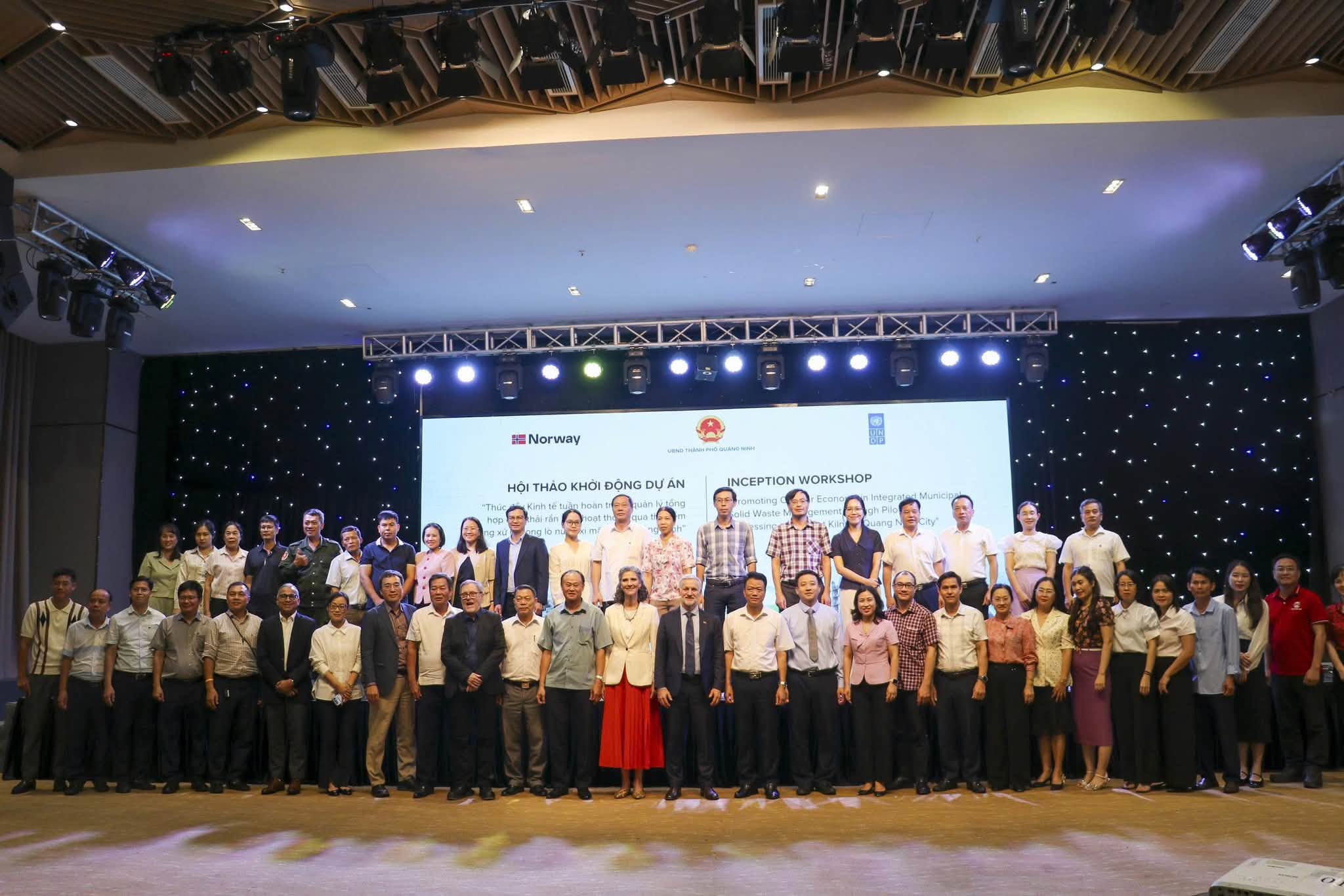
Training on tax documentation and business compliance for junk shop owners and large aggregators in Viet Nam.
How would you describe progress to date?
Vinh: We have made strong progress in moving responsible sourcing from standalone activities toward day-to-day supply chain practice across Duy Tan Recycling’s plastic recycling value chain. To date, around 171 businesses have received training on the Harmonized Framework and specific topics such as business compliance, tax documentation, and occupational health and safety, and more than 6,600 informal and formal waste workers have been reached directly and indirectly through improved working conditions and capacity building. We also expanded the Responsible Sourcing Initiative approach to a new recycler, Vikohasan, which is based in the north of Viet Nam.
One initial key learning is that responsible sourcing in Viet Nam’s fragmented recycling sector must build on trust across the value chain, as informal actors may be hesitant to share information or participate in project activities without sustained, relationship-based engagement. We have also seen that brand requirements can be a strong driver for adoption of the Harmonized Framework, with suppliers more willing to implement responsible sourcing practices when these are clearly requested by buyers, namely, brands. At the same time, Viet Nam’s ongoing implementation of Extended Producer Responsibility (EPR) under the revised Law on Environmental Protection presents an important opportunity to integrate responsible sourcing principles into the EPR framework, helping to strengthen social considerations alongside environmental objectives.
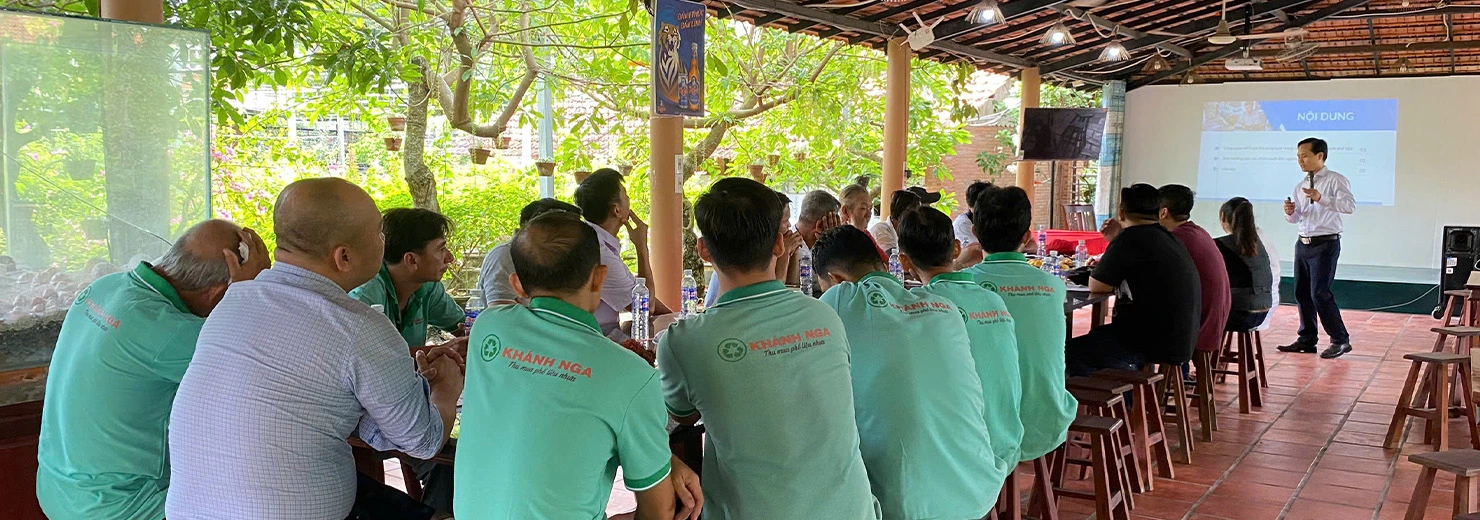
Training on tax documentation and business compliance for business owners and waste workers under Khanh Nga Aggregator (T2).
What is one highlight from this project that has stayed with you?
Madhu: The biggest highlight of this project has been addressing the risks identified by the small and medium enterprises (SMEs) in the value chain to improve their operational practices and working conditions. We observed that the training and capacity-building sessions added significant value for business owners, helping them set up worker safety protocols in their facilities, officially register their businesses, and navigate the paperwork for filing taxes. In 2025, we worked with 25 businesses. In 2026, at the request of the recycler and their suppliers, we expanded this intervention to 55 additional businesses in Duy Tan Recycling’s supply chain, reaching 80 SMEs in total. This is our largest engagement with businesses in the value chain across all the countries we work in, and the expansion shows that the intervention is meeting the needs of these businesses. In the long term, the systems being set up at the T2s and T3s will translate to improved working conditions for informal waste sector workers and better business opportunities for the enterprises themselves.

Madhu Nayaran at the Responsible Sourcing Initiative Annual Convening 2025.
What impact(s) do you hope to see by the end of the project?
Madhu: By the end of the project, I’d like to see the following systems in place so that responsible sourcing becomes business as usual in the recycling ecosystem, starting, of course, with Duy Tan Recycling’s supply chain. First, we aim to embed the responsible sourcing supplier management program into Duy Tan Recycling’s sourcing policies and operations. This will ensure that the recycler continues to ask its suppliers for transparency on working conditions across facilities at each tier and supports improvement where there are gaps. Second, we hope to see improved working conditions at all tiers of the supply chain that positively impact informal waste sector workers, such as access to sanitation, grievance redressal systems, and fewer workplace injuries, to name a few. Finally, through our partnership with UNDP Viet Nam, GreenU, and VECA, we hope to strengthen worker voices, both across the supply chain and eventually across the city, through waste collector networks. In the long run, our hope is that these networks become the local leadership that drives worker-led initiatives.
Endnotes
- UNDP. (2024). Acknowledge and promote the role of the informal waste workers towards a Just Transition in implementing Extended Producer Responsibility (EPR) and a global plastic treaty [online]. Available from: https://www.undp.org/vietnam/press-releases/acknowledge-and-promote-role-informal-waste-workers-towards-just-transition-implementing-extended-producer-responsibility-epr [accessed October 30, 2026].
- In Viet Nam, the recycling value chain typically progresses from waste pickers and small junk shops (Tier 4) to junk shops (Tier 3), then large aggregators (Tier 2), before materials reach recyclers (Tier 1).