











(TBTCO) Viet Nam is taking another important step in its journey toward green economic development as it, for the first time, develops an environmental, social, and governance (ESG) standards framework as a basis for identifying green projects and circular projects, and for considering interest rate support.
Completing the “key” to green finance
The Ministry of Agriculture and Environment is currently seeking comments on the draft Prime Minister’s Decision on this matter. If issued, this will be a key legal instrument, helping enterprises and household businesses access preferential capital in a transparent manner, while also realizing major policies on green economic development and the circular economy.
In recent years, the demand for mobilizing green finance in Viet Nam has increased sharply, especially in the context of the transition to a sustainable growth model. However, one of the major “bottlenecks” has been the lack of a unified system of criteria to determine what constitutes a green project, the extent to which a project is circular, and what conditions must be met to access incentives.
This draft Decision is expected to address that challenge. Once a clear set of criteria is in place, enterprises will have a “ticket” to access low-cost capital, while also finding it easier to participate in global green supply chains. Conversely, financial institutions will also have a basis for appraisal, reducing risks and transaction costs.
Pressure from international integration is also a factor driving the development of the ESG standards framework. New regulations from major markets such as the EU, from the Carbon Border Adjustment Mechanism (CBAM) to sustainability reporting standards, are shifting from encouragement to mandatory requirements. Without a compatible system of criteria, Vietnamese enterprises risk being excluded from global value chains.
According to the Ministry of Agriculture and Environment, the issuance of the Decision is also intended to implement Resolution No. 198/2025/QH15 and policies providing interest rate support of 2% per year from the state budget for the private economic sector when carrying out green and circular projects.
The draft sets out a relatively comprehensive and detailed system of criteria. Accordingly, the proposed list of green projects includes 45 types under seven key sectors, such as energy, transport, construction, water resources, agriculture, processing industry, and environmental services.
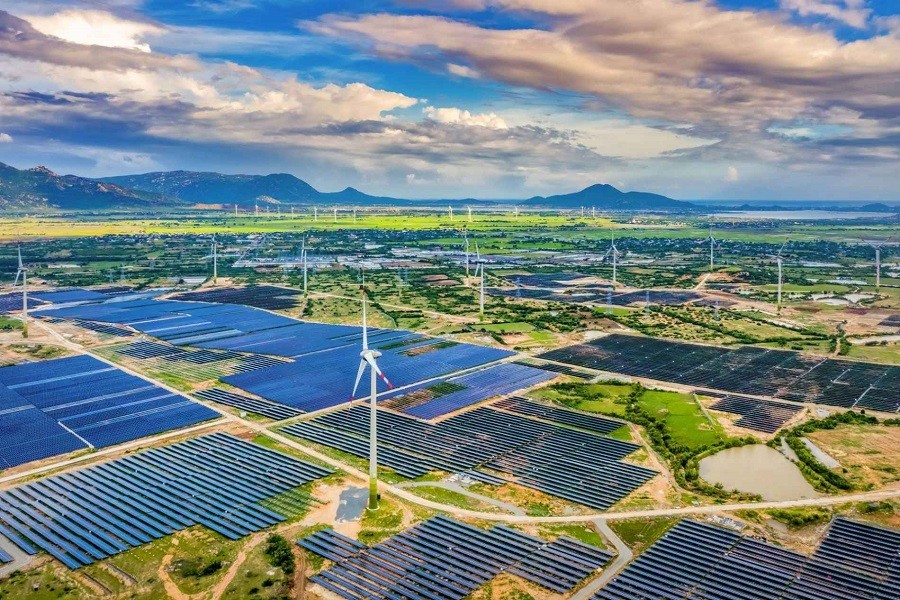 |
| Green and circular projects will receive investment capital incentives. Photo: TL |
In parallel, circular projects are divided into three main groups, including: circular design, optimizing resource use and reducing the extraction of non-renewable resources; circular use, extending the life cycle of products through reuse, repair, and sharing; and resource recovery, recycling, treating waste, and reducing waste generation and environmental impacts.
In addition, the draft also identifies eight main sectors to be considered for application, ranging from agriculture and energy to logistics, industrial parks, and urban areas.
A noteworthy new point is that, for the first time, an ESG standards framework with 52 criteria is being introduced as a basis for assessment and interest rate support. Large enterprises must meet at least 40 criteria, while small enterprises and household businesses will apply criteria at a level appropriate to their scale. ESG reports will be submitted to banks and financial funds, and will also be made public, if available.
Flexible mechanism with strict control
One positive aspect of the draft is that it allows enterprises to self-assess their projects or conduct assessments through independent assessment organizations. This mechanism helps reduce costs, especially for small-scale projects.
However, to ensure transparency, assessment organizations must meet international standards such as TCVN ISO/IEC 17029 or ISAE 3000. This is intended to ensure objectivity and prevent the misuse of policies.
Notably, the draft also clearly stipulates the responsibility of investors to maintain the required criteria. If a project no longer meets green or ESG standards during the period of receiving support, the enterprise must report this and may have its incentives suspended or withdrawn.
In addition, the mechanism requiring reports to local authorities within 30 days after receiving support will help establish a national database on green projects, an important foundation for managing and adjusting policies in the future.
The development of the ESG standards framework is not merely a technical regulation, but also an important step in connecting state policy with the financial market and international requirements.
Once issued, the Decision will contribute to forming a synchronized legal ecosystem, in which enterprises have clear guidance, banks have a basis for appraisal, and the State has an effective regulatory tool.
In the context where green transition is becoming an inevitable trend, the “standardization” of criteria for green and circular projects will be an important lever for Viet Nam to enhance its competitiveness, attract high-quality capital flows, and move closer to its sustainable development goals.
The State is gradually linking credit support, interest rate support, and the expansion of access to loans with green projects, projects that meet circularity criteria, and the application of the environmental, social, and governance standards framework.