








September 17, 2026
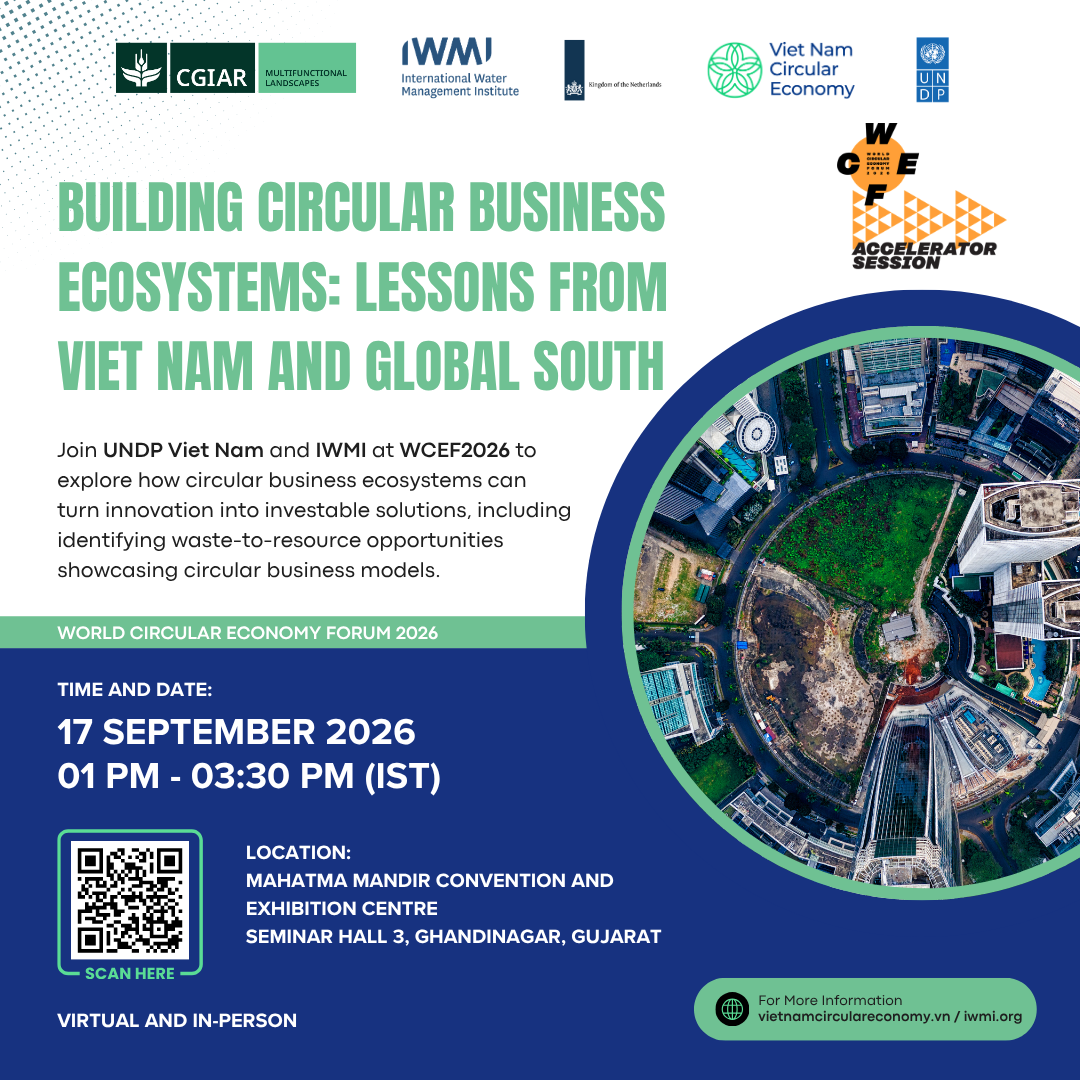
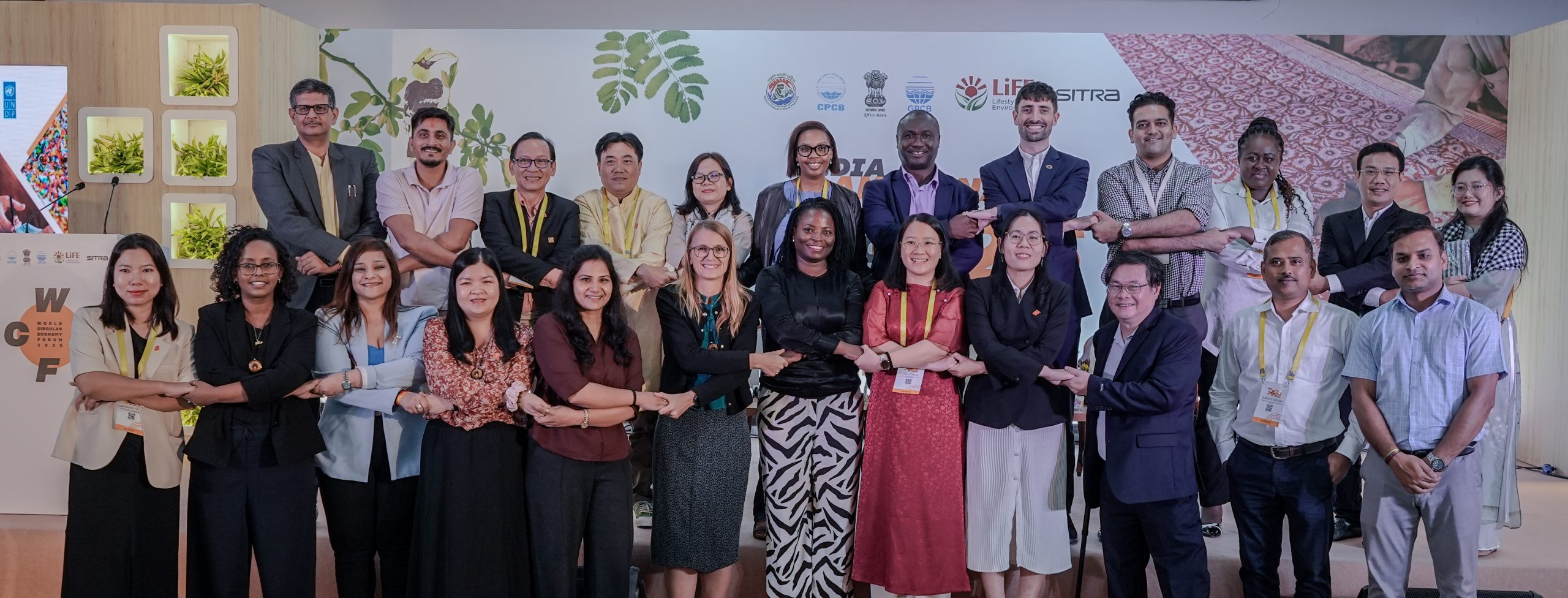
Gandhinagar, Gujarat, India, September 17, 2026 – The International Water Management Institute (IWMI) and UNDP Viet Nam co-organized an Accelerator Session at the World Circular Economy Forum 2026 (WCEF2026), titled “Building Circular Business Ecosystems: Lessons from Viet Nam and Global South.” The hybrid session brought together enterprises, government representatives, investors and development partners, including the Ministry of Industry and Trade of Viet Nam, the Netherlands Embassy, GIZ, the Agricultural Finance Corporation (AFC) India, the Accra Metropolitan Assembly and Holland Circular Hotspot, to examine how circular economy pilots in the Global South can move toward bankable, investable and scalable businesses.
Six Vietnamese enterprises presented business cases spanning textiles, mattresses, denim, cosmetics and food processing, alongside a community-based agricultural cooperative, each demonstrating a distinct approach to keeping material and biological value in circulation. Presentations included fabric produced from pineapple leaf fiber, mattress components recovered for reuse, denim materials given a second market life through traceable buyer specifications, cosmetics made from dragon fruit peel, protein foods produced from young jackfruit, and a cooperative model that rears black soldier fly larvae on organic farm and food waste, converting the larvae into animal feed and returning the residue to the soil as fertilizer, closing a loop between waste, livestock and crop production while anchoring income within the local community. Together, the cases illustrated that circular practices are already underway across Viet Nam’s private sector, even as enterprises continue to face common constraints in accessing finance, markets, technology and policy support needed to scale.
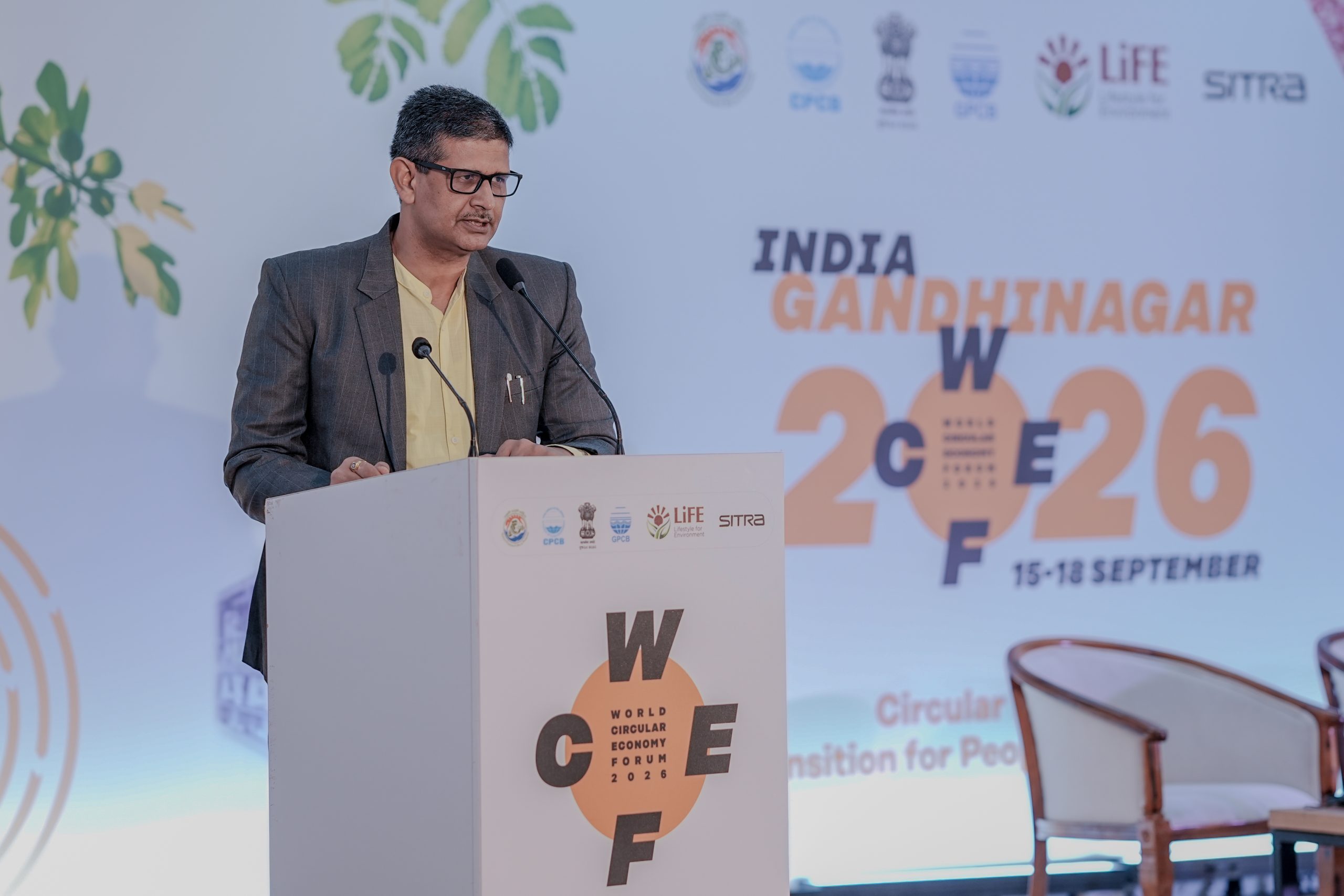
Dr. Gopal Kumar, IWMI Country Representative for India and Bangladesh, opened proceedings by situating the discussion within the realities faced by developing regions. “The Global South has a legitimate development aspiration; however, it cannot simply copy the growth template used elsewhere, because it has a different relationship with its natural resources, one built on a scale of extraction it cannot and should not repeat,” he said. “That means efficiency alone is not enough; we need to reuse, regenerate, and close the loop. Yet technology and innovation on their own will not get us there; we need an enabling environment of policy, business models, financing mechanisms, and collaboration to turn today’s scattered innovations into tomorrow’s scale.”
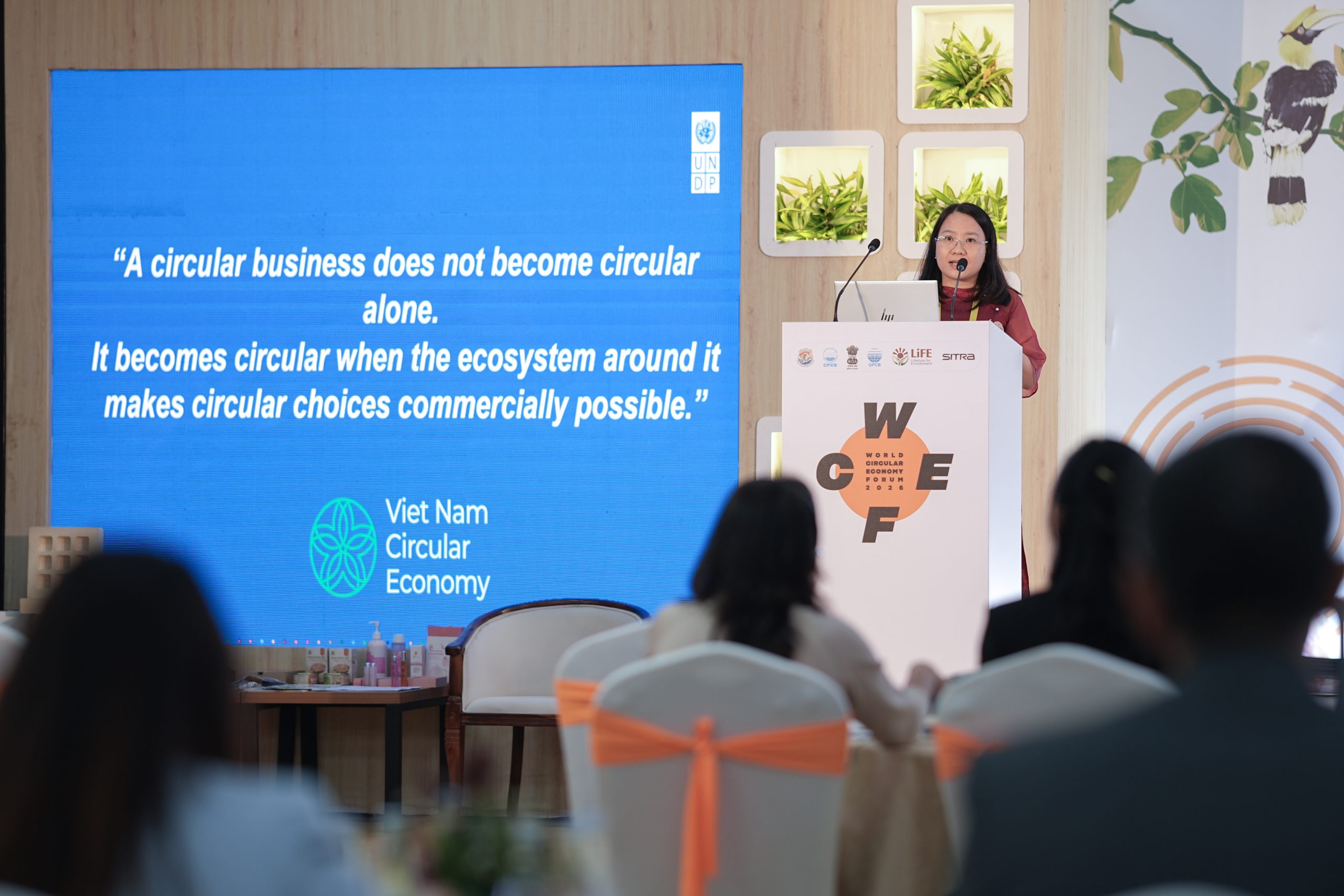
Ms. Hoang Thi Dieu Linh, Program Officer, UNDP Viet Nam, echoed this from the enterprise side of the discussion: “What we heard from Vietnamese enterprises is that circular and innovative solutions are already happening, but moving from a promising pilot to a scalable business requires more than a good product or technology. SMEs need the ecosystem around them to help standardize materials, verify circularity, measure impact, access finance and connect with reliable markets and value-chain partners. The next step is therefore to turn circularity from an individual business ambition into a shared ecosystem effort, by helping enterprises to build evidence, comply with standards, enhance partnerships and market confidence needed to make their circular models credible, investable and scalable.”
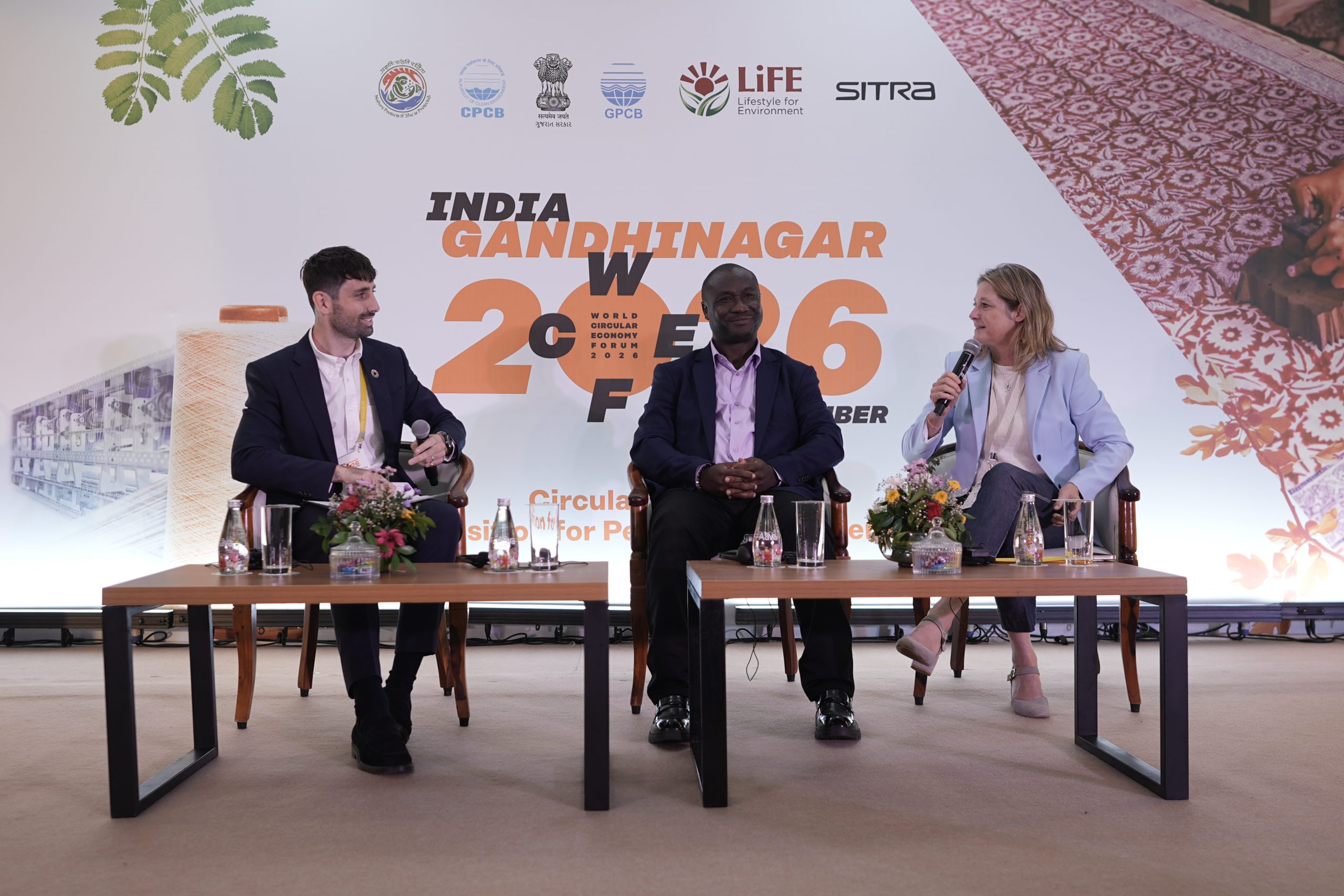
“The panel that followed reinforced this message from a financing and partnership angle, with panelists describing a “missing middle” in circular economy finance and calling for aggregation models, blended finance and connector-style development partnerships to bridge it. “The challenge is not a shortage of capital; it is creating investable structures through which capital can confidently reach circular businesses,” said Mr. Amit Sinha of the Agricultural Finance Corporation (AFC) India. Ms. Fleur Gribnau of the Netherlands Embassy in Viet Nam added that development partners “should act as connectors, not just funders,” urging partners to “fund less transactionally and connect more structurally.” From the municipal side, Engineer Solomon Noi, Director of Waste Management at the Accra Metropolitan Assembly, described why his city had turned to circularity out of necessity: “No matter how large a landfill is, it will eventually reach its exhaustion; that is why we brought in circularity to manage Accra’s waste.”
Discussions throughout the day revealed a major gap: good intentions and promising pilots often outpace the evidence needed to act with confidence. Dr. Tosin Somorin, IWMI Researcher in Circular Economy and Waste Management, reflected on what this meant for closing that gap: “What stood out to me is how much decision-makers are still working with incomplete evidence. A local government or an entrepreneur can see waste and can see the opportunity, but they rarely have a reliable way to compare which option actually pays off, socially, environmentally and financially, before committing to it. That is the gap the WasteWise Decision Support Tool (DST), which IWMI launched at the event, is starting to close, so that circularity becomes a defensible decision and pilots can grow into bankable, investable and scalable businesses.” Dr. Solomie Gebrezgabher, IWMI Senior Researcher – Economics, who presented WasteWise at the session, explained what sets it apart: “Most feasibility studies look at one or two indicators. WasteWise DST lets you weigh them all at once, and still tailor the ranking to what a decision-maker actually prioritizes.”
For more information, please kindly contact:
Dr. Tosin Somorin, Researcher – Circular Economy (Waste Management), IWMI
Email: t.somorin@cgiar.org
Ms. Hoang Thi Dieu Linh, Program Officer, UNDP Viet Nam
Email: Hoang.thi.dieu.linh@undp.org