









Activating the Green Viet Nam event
Green Viet Nam is a programme initiated by Tuoi Tre Newspaper and the Packaging Recycling Organization Vietnam (PRO Vietnam), with the support and coordination of the Department of Climate Change under the Ministry of Agriculture and Environment and the Ho Chi Minh City Vietnam Youth Federation.
The workshop aimed to gather opinions from experts on orientations, solutions, and mechanisms to promote the transition to clean energy and renewable energy sources, toward the goal of sustainable development.
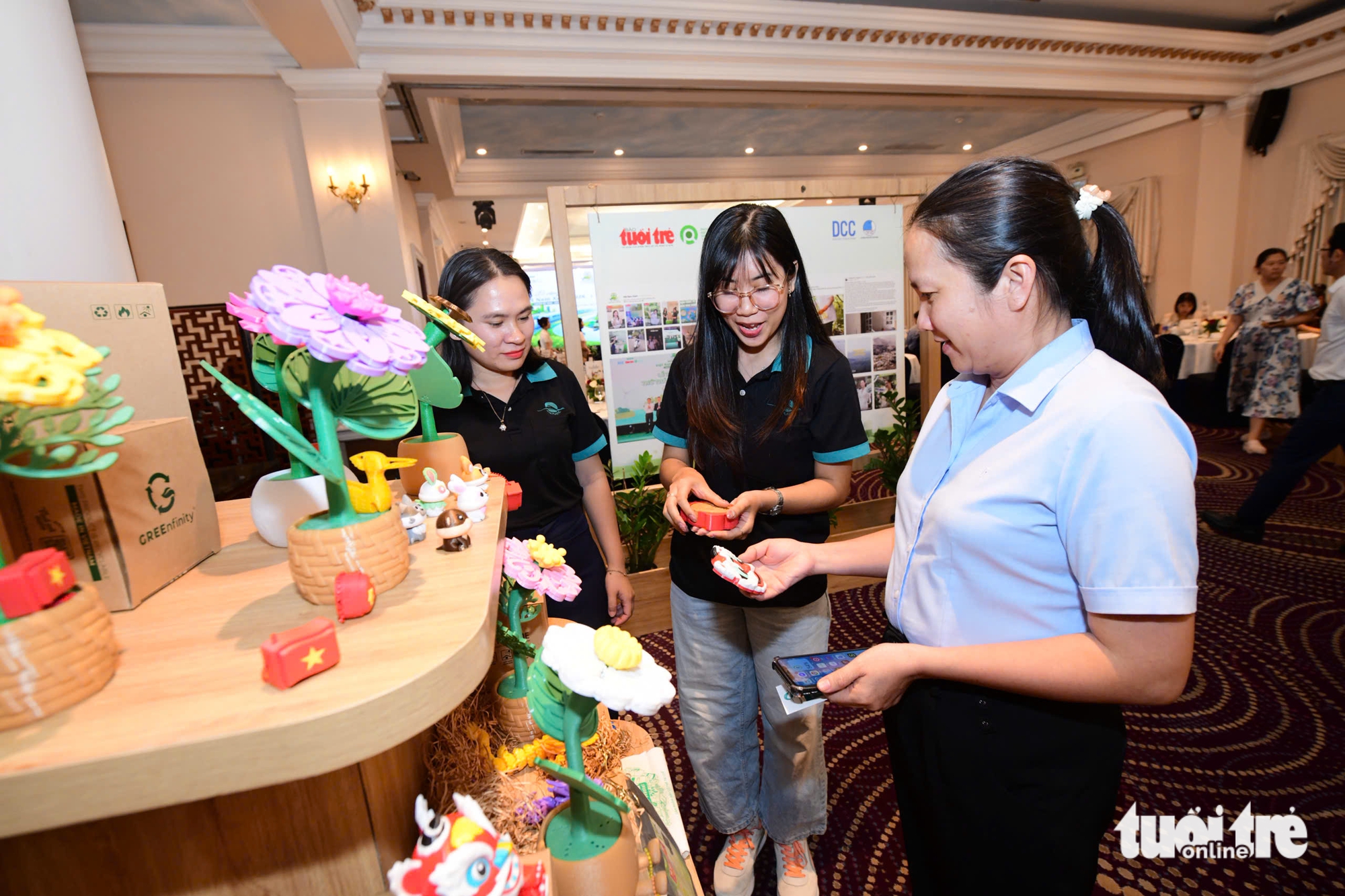
Many businesses showed interest and enthusiasm for the workshop “Green Energy Transition – A Driver of Sustainable Growth” on the afternoon of April 21. Photo: QUANG DINH
According to managers, experts, and businesses, Ho Chi Minh City’s rapid development must go hand in hand with sustainability, with economic growth linked to improving environmental quality and people’s quality of life.
Therefore, the event received great attention from the business community with a sustainable development orientation. In this entire process, energy transition is a key pillar.
Key issues such as the roadmap for green energy transition, orientations to reduce dependence on fossil fuels, and the potential for developing new energy sources in Viet Nam will be analyzed and discussed, with recommendations put forward for effective implementation.
Through the event, businesses will listen to the experiences and solutions of other enterprises in the process of adapting to green transition requirements.
With the presence of many competent authorities, obstacles related to policy support mechanisms, technological solutions, and the necessary conditions to promote the use of clean energy and renewable energy in production and daily life will also be noted for resolution.
No one can stand outside the rule of green transition
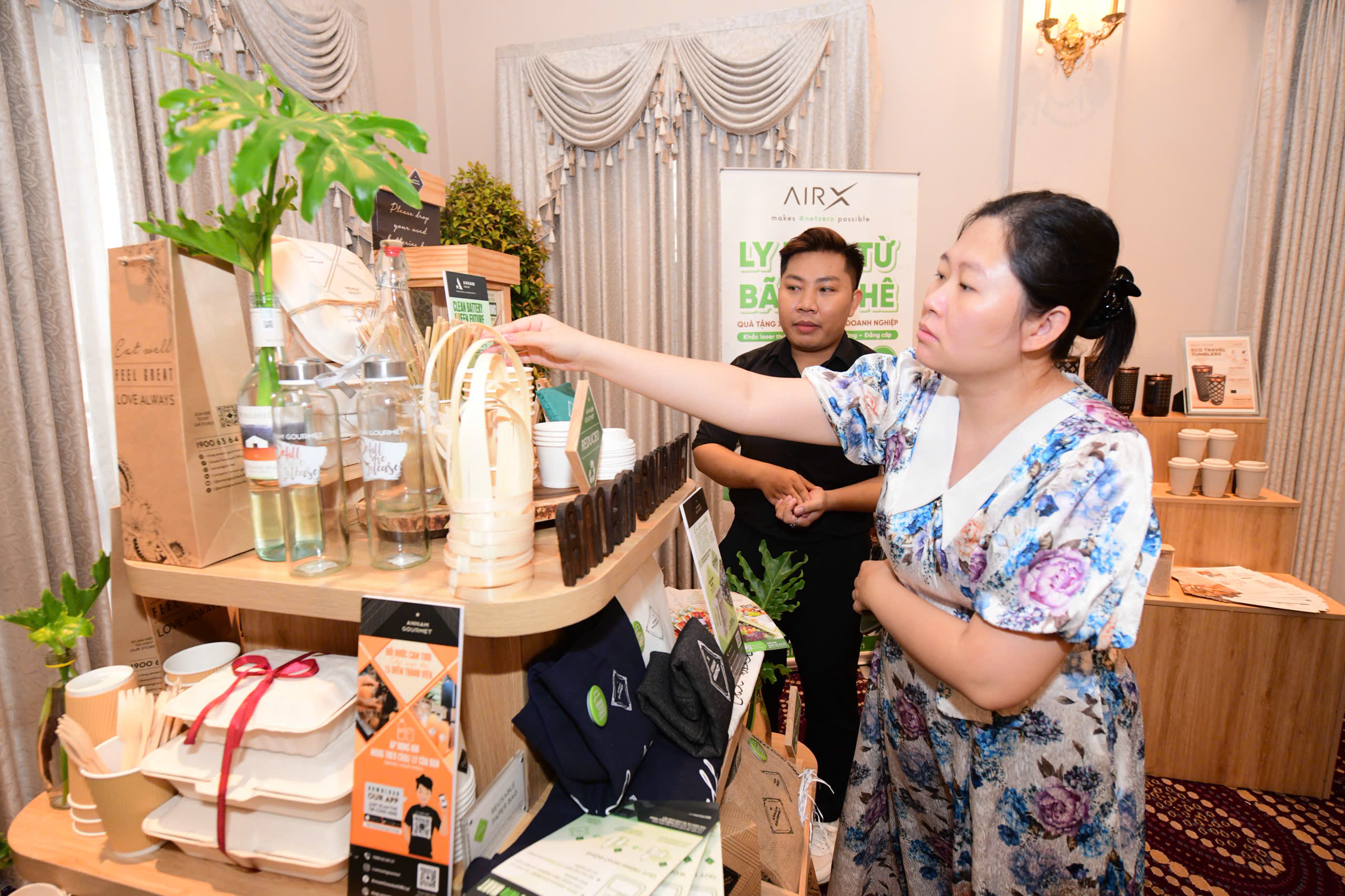
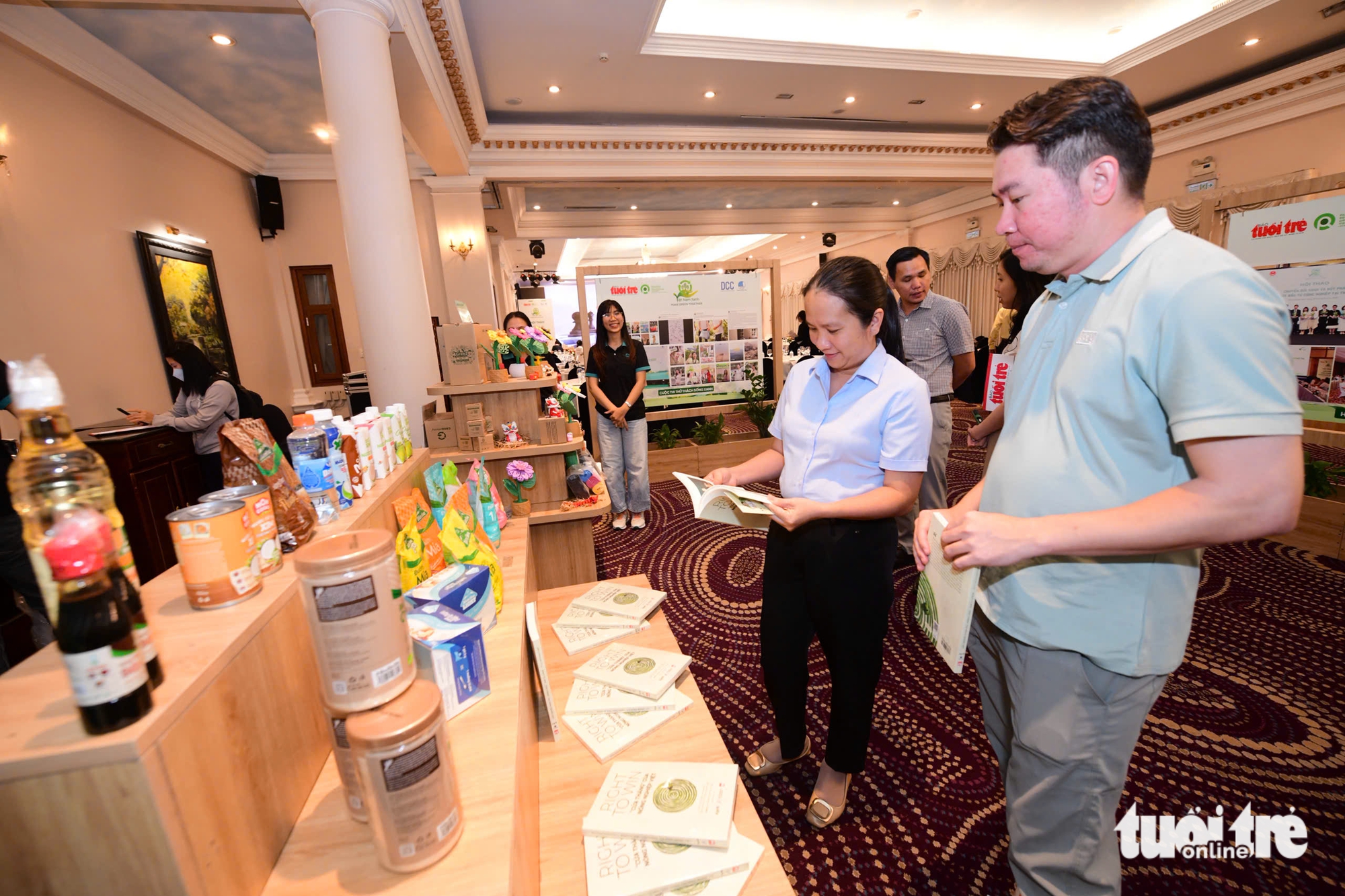
Consumers visited booths displaying recycled products. Photo: QUANG DINH
Right before the opening ceremony, many visitors stopped at booths displaying recycled products. Quite a few were surprised when they directly heard introductions about recycled products and the functions of green products.
“I did not think recycled plastic could be made into so many colorful flowers like this. They are very beautiful and lively,” shared Ms. Lan Anh, 25 years old, a resident of Nhieu Loc Ward, who was visiting the event.
Beyond the aesthetic impression, Ms. Lan Anh said she especially liked the multifunctional element in the product design.
For example, a recycled flower pot can serve many functions: the flower petals can be used as a phone stand; the pot can be used as a container or a small planter; while details such as leaves, petals, and pistils are designed separately and can be used as coasters or decorative items.
Ms. Nguyen Thanh Giang Nhi, representative of the booth, said that all products are made from recycled plastic, aiming to extend the life cycle of materials.
According to Ms. Nhi, the “multifunctional” element is becoming an important direction to improve the competitiveness of recycled products, which in the past were often considered less attractive than ordinary consumer goods.
“Recycled products today no longer stop at the ‘green’ factor, but are increasingly being improved in terms of aesthetics, utility, and environmental message,” Ms. Nhi said.
In addition to focusing on functionality, the products also integrate cultural elements into their design. “This approach not only creates an aesthetic highlight, but also helps tell cultural stories through products, making them closer to domestic consumers while also opening up potential for development into tourism gifts,” Ms. Nhi shared.
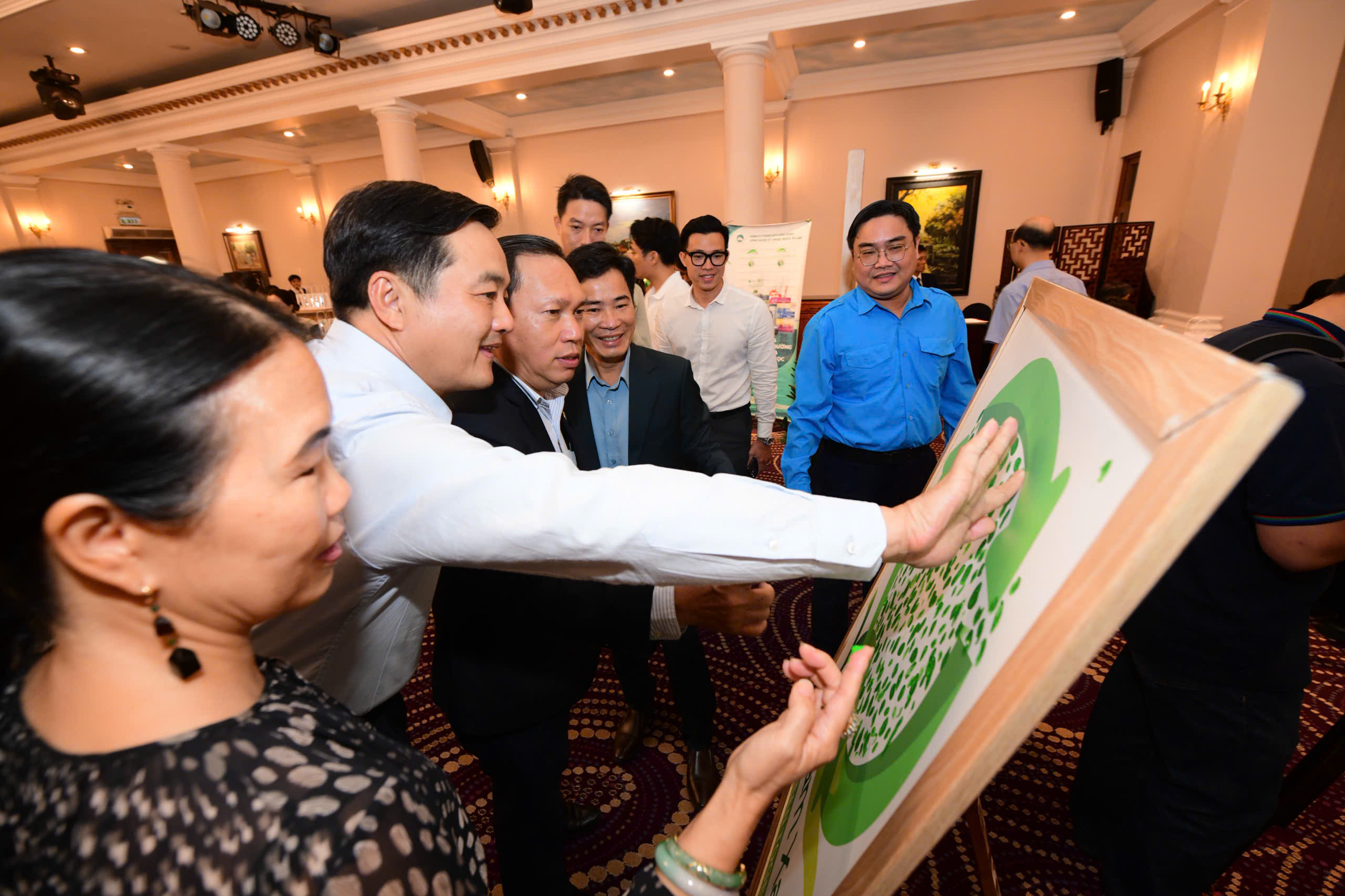
Mr. Bui Ta Hoang Vu, Director of the Ho Chi Minh City Department of Industry and Trade, printed his fingerprint to commit to accompanying Green Viet Nam. Photo: QUANG DINH
Continuing many activities to promote green transition
Launched in April 2024, Green Viet Nam has gradually affirmed the mark of a project for sustainable development through a diverse, practical series of activities with strong community outreach.
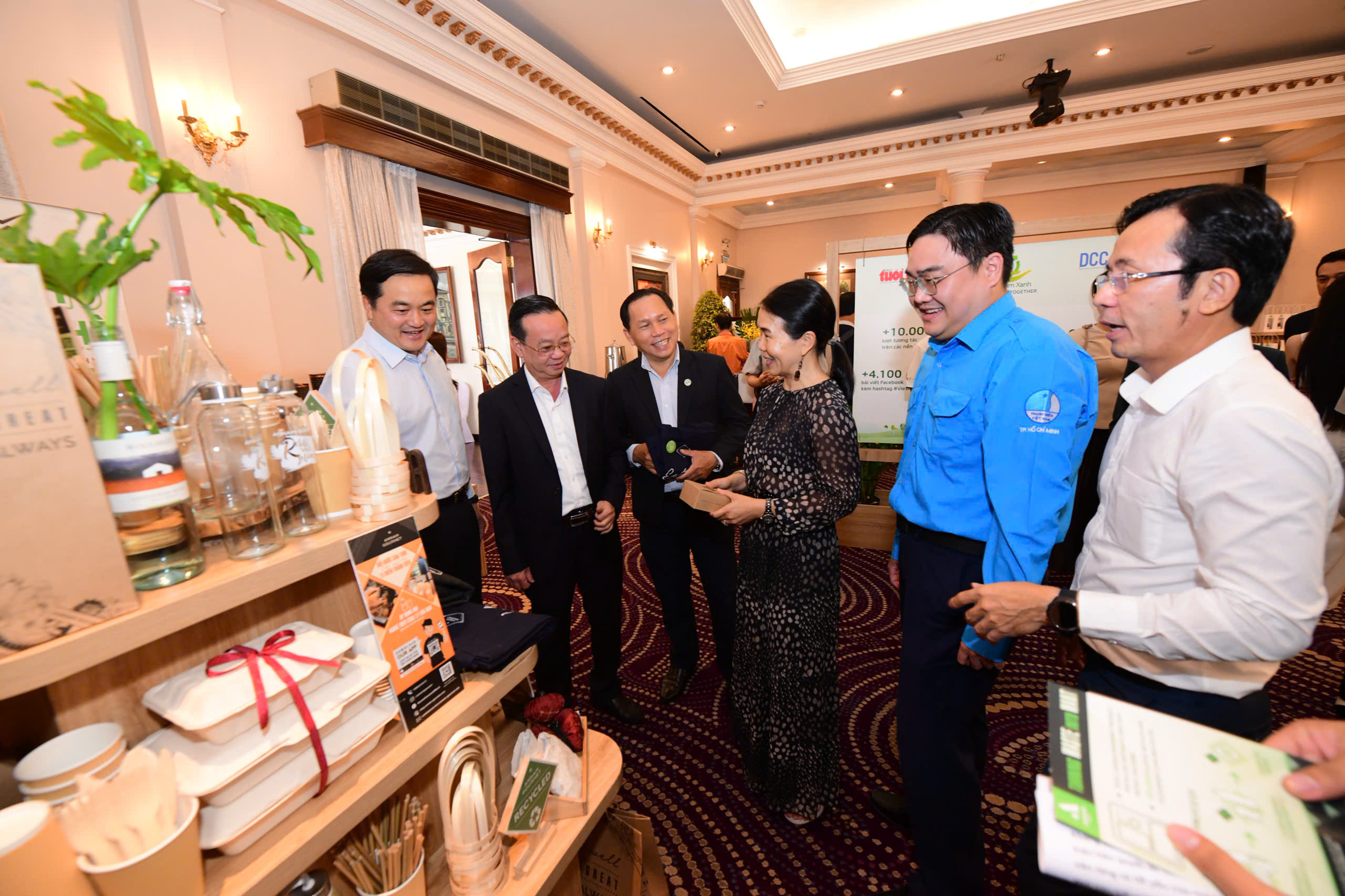
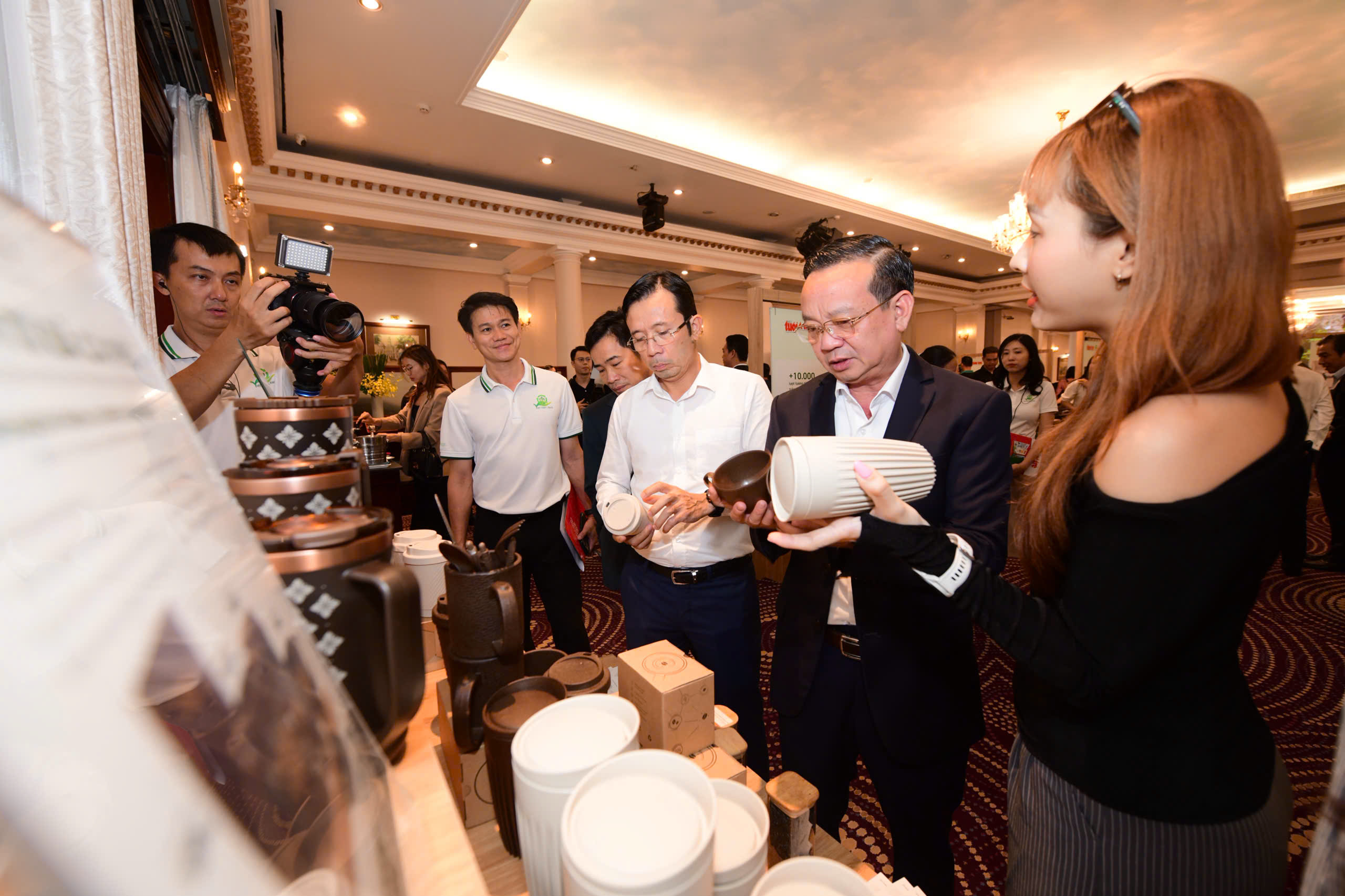
Ho Chi Minh City leaders visited booths with recycled products and listened to businesses sharing stories about energy saving. Photo: QUANG DINH
After two years of implementation, the project has organized nearly 20 diverse activities such as workshops, competitions, tours to green factories and enterprises, the Green Experience Day in Khanh Hoa, and the Green Viet Nam Festival in Ho Chi Minh City. Among them, the Green Viet Nam Festival has become an annual highlight of the project, attracting more than 33,000 visitors and giving out more than 28,000 green gifts.
Nearly 30,000 units of recyclable waste were also collected through the “Exchange Waste for Gifts” programme at the event, thereby strongly spreading green actions throughout the community. Alongside practical activities, the project has also spread widely across media platforms, with more than 4,000 news articles, posts, and videos, and more than 100 million interactions across all platforms.
From the message “Reduce – Reuse – Recycle” to “Promoting Green Consumption,” Green Viet Nam has gradually moved beyond the scope of a media campaign to become a project connecting communities, businesses, and consumers on the journey toward sustainable development.
Continuing that journey, Green Viet Nam 2026 is implementing the theme “Green Transition – Sustainable Effectiveness,” including many activities such as a series of thematic workshops, talk shows and podcasts, the “Discover Green Enterprises” programme, the Green Viet Nam trekking race, the Green Viet Nam Festival 2026, the Green Viet Nam Award 2026, the “Green Ideas” competition, and the writing contest “Creating the Agriculture of the Future,” organized in coordination with Thanh Thanh Cong – Bien Hoa Joint Stock Company, AgriS, among others.
These activities aim to promote green transition from awareness to action across society, spread practical models and initiatives, and contribute to creating meaningful values for the environment, the economy, and society.
The workshop served as a meeting point for businesses to listen to experiences and solutions from other enterprises in the process of adapting to green transition requirements. Photo: QUANG DINH
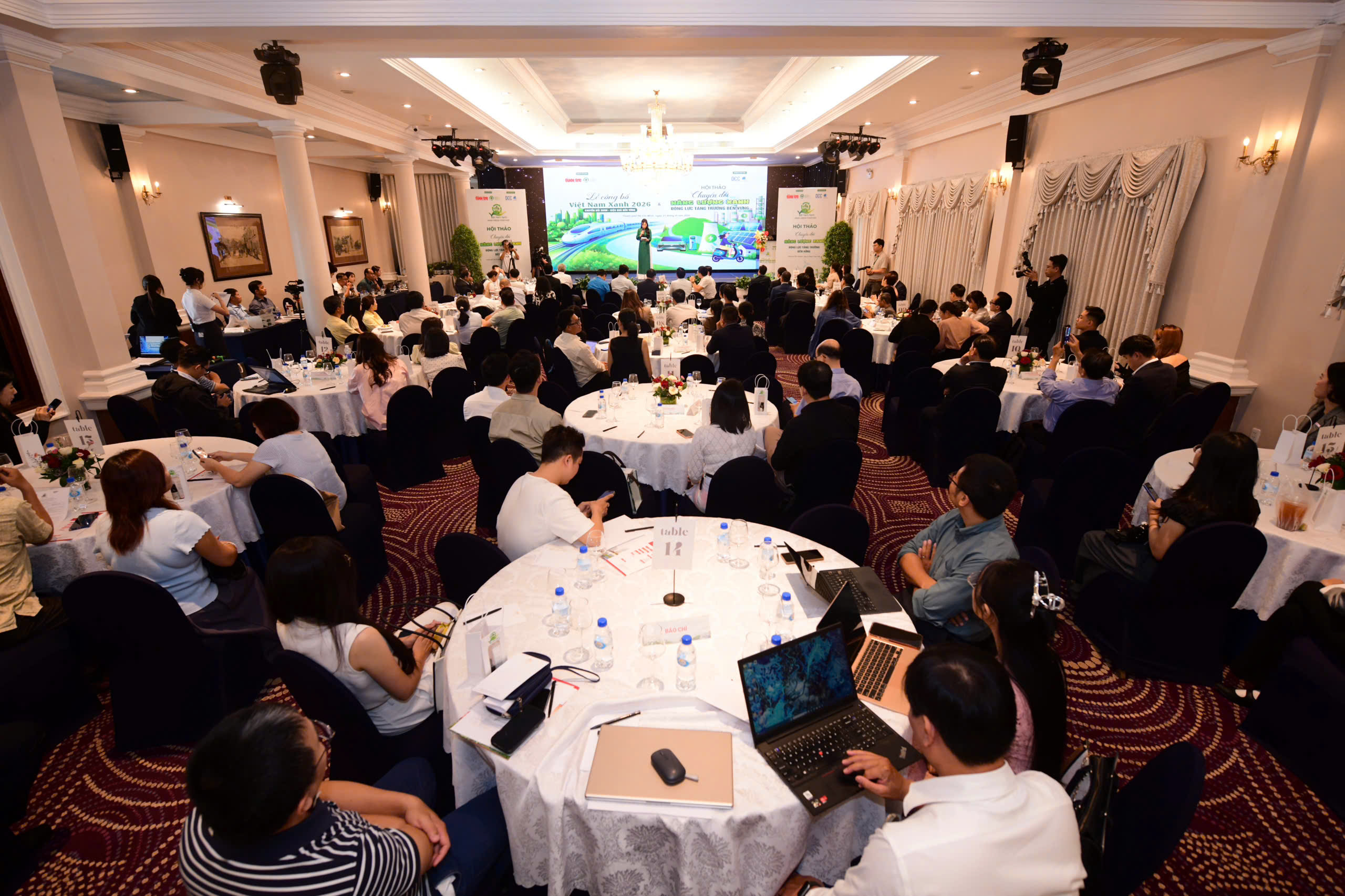
The workshop attracted the participation of about 200 delegates, including regulatory agencies, businesses, and leading experts in the fields of energy and environment. Photo: QUANG DINH
No longer a “trend,” but now a “revolution”
Mr. Tran Quoc Tam, Chairman of LITHACO, said that green transition today is no longer a “trend,” but has become a “revolution.”
Previously, the main drivers came from cost savings and environmental protection. However, in the context of conflict in the Middle East, energy security and self-reliance are becoming new and stronger drivers. According to him, this is not only a story for Viet Nam, but a common trend in many countries around the world, forcing economies to accelerate their transition process.
From a business perspective, LITHACO has proactively prepared for many years, especially in terms of high-quality human resources.
According to Mr. Van Huy Hoang, Director of Strategy and Digital Transformation, the enterprise has proactively developed an emissions reduction strategy based on a systems approach, implementing it synchronously across the entire value chain.
Soybeans have the ability to fix nitrogen, improve soil, reduce dependence on chemical fertilizers, and create a favorable foundation for sustainable development from raw material areas.
In operations, the enterprise optimizes its factory system across the North, Central, and South through water and energy savings, emissions control, and the reduction of empty trips in logistics. Rooftop solar power is also being promoted to reduce dependence on grid electricity and cut CO₂ emissions.
By 2025, energy savings are expected to reach around 2 to 3%, contributing to reduced production costs. At the same time, the enterprise is building a system to measure ESG indicators in order to monitor and improve performance over time.
In raw material areas, Vinasoy is strengthening cooperation with research institutes, universities, and farmers to implement sustainable farming models, especially crop rotation to improve soil fertility, reduce emissions, and optimize long-term efficiency.