









Promoting Green Growth for Climate Change Adaptation
The Documents of the 14th National Party Congress continue to affirm the requirement for rapid and sustainable development based on science, technology, innovation, and digital transformation; the effective management and use of resources; environmental protection; and proactive adaptation to climate change.
In this context, green growth, the circular economy, and the low-carbon economy are identified as consistent orientations for restructuring the economy in depth, improving productivity, quality, efficiency, and competitiveness. In response to development requirements in the new period, promoting green growth is not only a choice but an inevitable path to harmonize economic growth with environmental protection and improve people’s quality of life.
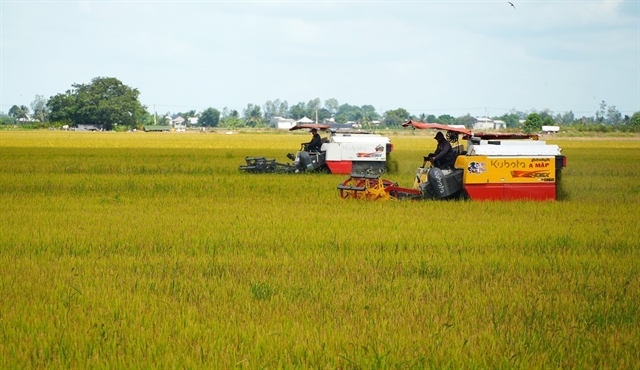
Thoroughly grasping that spirit, the Party Committee of the Ministry of Agriculture and Environment quickly issued an Action Programme to implement the Resolution of the 14th National Party Congress, with the goal of developing sustainable agriculture in a green, ecological, and low-emission direction; firmly ensuring food security; increasing incomes for rural people; effectively managing, exploiting, and using resources; proactively adapting to climate change; and actively contributing to the economy’s double-digit growth target.
From this goal, the Action Programme of the Party Committee of the Ministry of Agriculture and Environment clearly defines tasks, timelines, lead units, coordinating units, and implementation resources. The core issue is not only quantitative targets but also clarifying the content of each task: why it must be done, how it should be done, who is responsible, and how the results will be measured. Each task, when implemented quickly, correctly, fully, and effectively, will directly create additional momentum for growth.
The focus of the Action Programme is to improve institutions and create a legal corridor for new areas such as the green economy, circular economy, and carbon market; promote decentralization and delegation of authority in association with inspection and supervision; strongly shift from pre-inspection to post-inspection; and use science, technology, and data as the foundation for modern management. The roadmap for amending, supplementing, and issuing legal normative documents is defined specifically, with clear responsibilities and clear deadlines, demonstrating the determination to bring the Resolution into life through practical and measurable actions.
In the new period, green growth is both a development orientation and a commitment of responsibility to the nation’s future. With a clear awareness of responsibility, many localities have proactively concretized this orientation through suitable programmes and models.
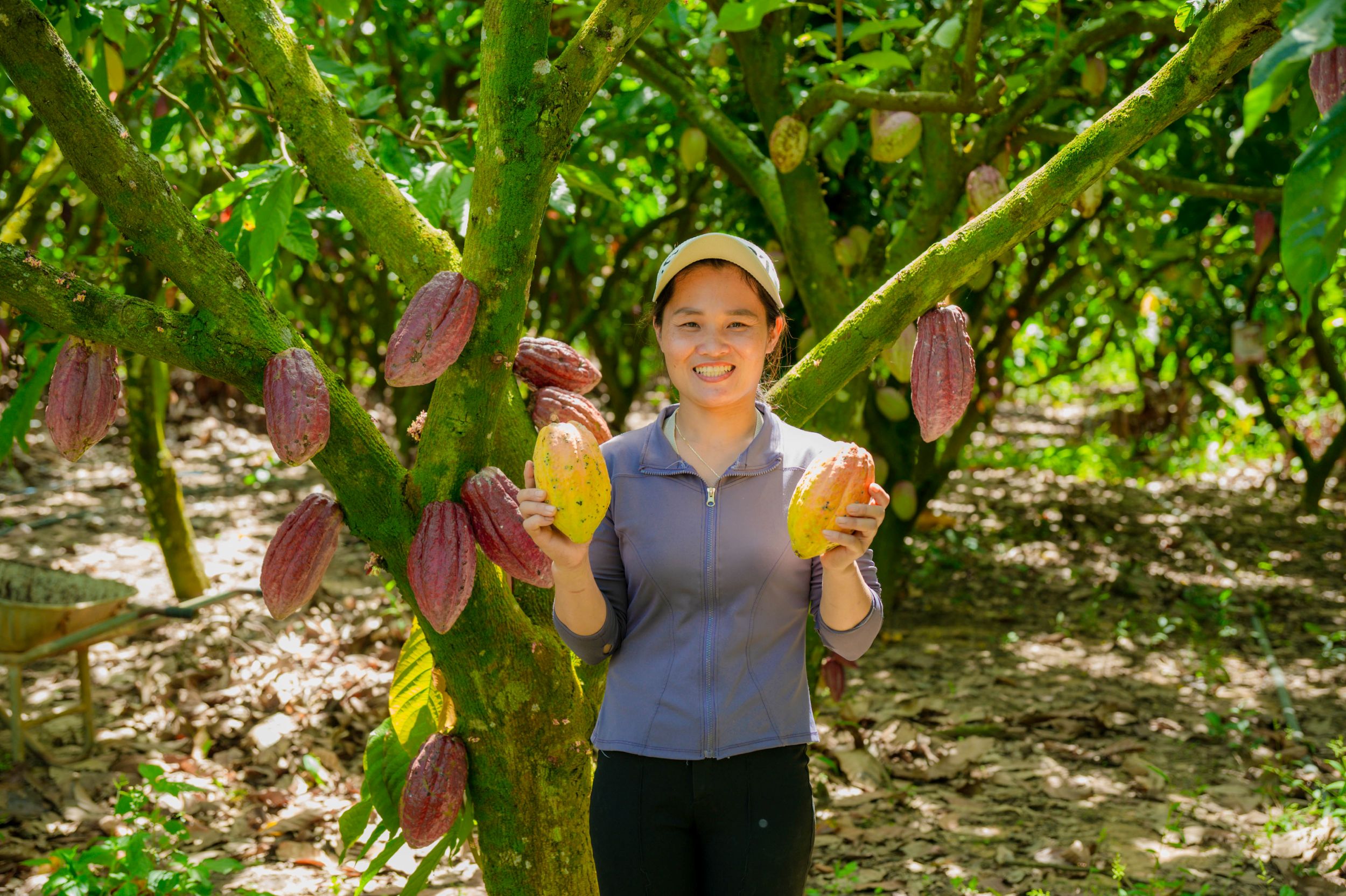
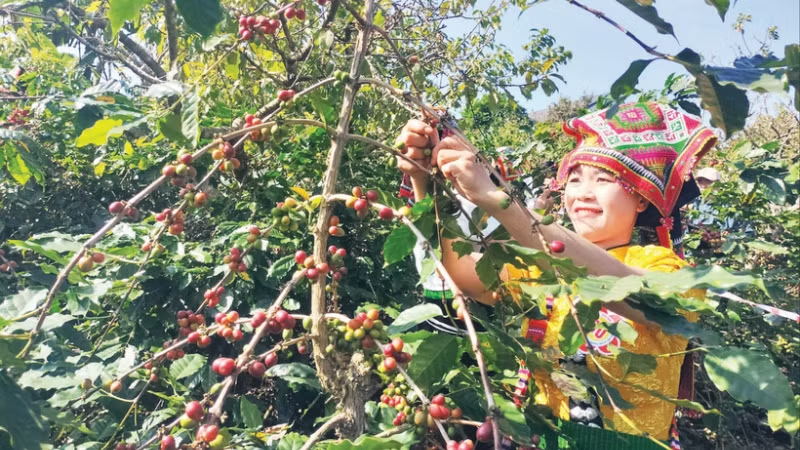
The reality in Sơn La is a clear demonstration of a green growth approach linked to local characteristics. Closely following the central guidelines, the Sơn La Provincial Party Committee has identified two pillars: developing clean, organic agriculture with high-tech applications that can adapt to climate change; and promoting cultural and landscape advantages to develop eco-tourism, agricultural tourism, and experiential tourism. To date, Sơn La has formed nine high-tech agricultural zones; developed hundreds of planting area codes and safe agricultural product supply chains; developed hundreds of OCOP products, many of which have been protected domestically and internationally; and exported agricultural products to more than 20 countries and territories.
In the field of tourism, the province aims to build a sustainable eco-tourism brand, creating momentum for shifting the economic structure toward a green direction. Notably, Mộc Châu National Tourist Area has been honored by the World Travel Awards as “Asia’s Leading Nature Destination” for four consecutive years, 2022, 2023, 2024, and 2025, and as the “World’s Leading Nature Destination” for three years, 2022, 2023, and 2025.
However, the development of a green economy associated with high-tech agriculture and sustainable eco-tourism in Sơn La Province still faces several limitations and difficulties related to infrastructure, inter-regional transport systems and connecting transport routes; incentive policies, technical standards, and regulations for green agriculture and organic products; human resources with skills to operate high technology; and state management capacity in eco-tourism.
With measurable mechanisms, policies, and results, green growth will become a pillar of the new development model, contributing to the realization of the aspiration for rapid and sustainable national development.
Therefore, according to provincial leaders, in the coming period, the Provincial Party Committee will continue to renew its leadership methods, select the right key tasks and breakthrough areas for focused direction, promptly review practical experience, and replicate effective models. Attention will be paid to developing the circular economy in agriculture, promoting the reuse and deep processing of by-products and waste products; developing clean, organic agriculture with high-tech applications linked to eco-tourism, contributing to reducing environmental impacts, protecting biodiversity, and preserving cultural identity and natural landscapes. At the same time, the province will strive to effectively exploit the potential of solar power, hydropower, wind power, and biomass power; and replicate production and renewable energy use models suitable for each region.
With measurable mechanisms, policies, and results, green growth will become a pillar of the new development model, contributing to the realization of the aspiration for rapid and sustainable national development.