







International cooperation paves the way for green and sustainable agriculture.
Collaboration between international organizations and the public-private sector has propelled the transformation of Vietnam’s food system into a new phase: from experimentation to expansion, from projects to policies, and from individual support to systemic cooperation.
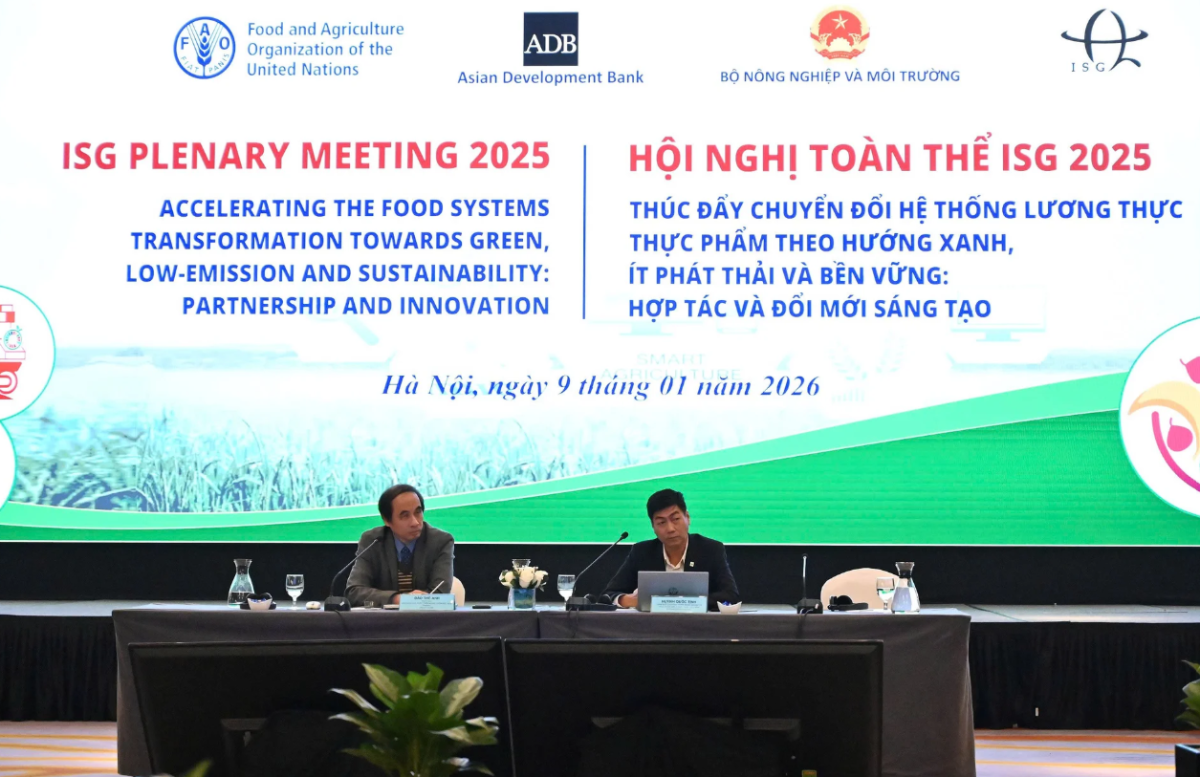
On January 9, 2026, in Hanoi, the Ministry of Agriculture and Environment, in collaboration with the Food and Agriculture Organization of the United Nations (FAO) and the Asian Development Bank (ADB), organized the International Support Program (ISG) Plenary Meeting with the theme “Promoting the transformation of food systems towards green, low-emission, and sustainable practices.”
The conference served as a high-level policy dialogue forum between Vietnam and the international partner community to guide cooperation, mobilize resources, and share effective transformation models.
TRANSFORMING THE FOOD SYSTEM FROM MODEL TO POLICY
In his opening remarks, Mr. Nguyen Do Anh Tuan, Director of the International Cooperation Department (Ministry of Agriculture and Environment), stated that during the 2021-2025 period, Vietnam implemented over 200 ecological agriculture models with the support of international organizations such as FAO and UNDP. These models demonstrate the ability to adapt to climate change, reduce emissions, and improve farmers’ livelihoods.
However, the biggest challenge now is no longer the lack of models, but how to scale up, connect, and transform these fragmented initiatives into national-scale policies and programs.
Mr. Do Anh Tuan added that in 2026, Vietnam will focus more strongly on nutrition and consumer behavior, with priorities such as food safety, traceability, and sustainable consumption. To achieve this goal, it is necessary to strengthen the sharing, inheritance, and transfer of pilot results into national-level models, linked to the legal framework and development planning.
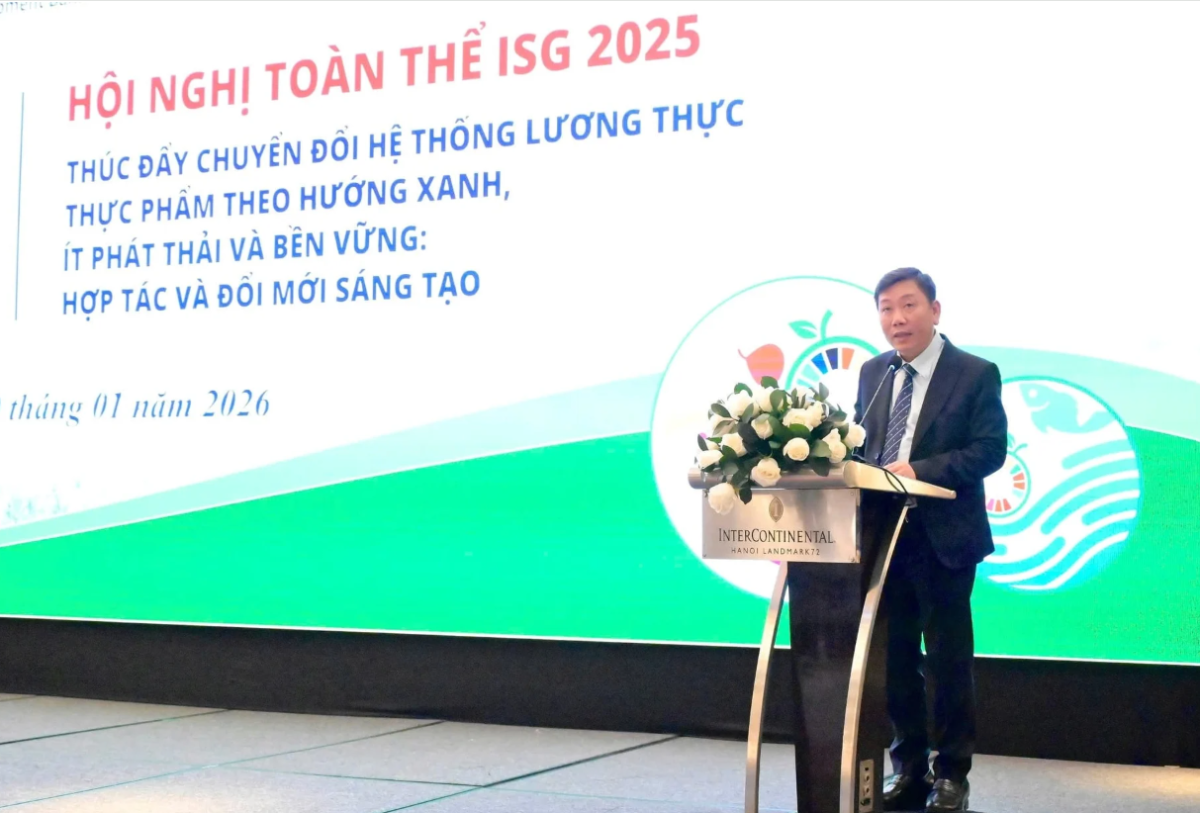
At the technical session of the ISG conference held on the morning of January 9th, FAO representatives affirmed that integrating food system transformation into regional and national development programs is a decisive factor for success. FAO also emphasized the role of green finance, agricultural insurance, and carbon markets in the new phase.
The conference also introduced several proven ecological models in Vietnam, such as rice-shrimp farming, rice-lotus farming, shrimp-mangrove farming, agroforestry, flood season fish farming, and alternating wet-dry irrigation (AWD) techniques to reduce methane emissions.
However, according to analyses at the conference, ODA funding still accounts for over 60% of total resources, while the private sector contributes only about 9%. The lack of green finance, inconsistent MRV (Measurement, Reporting, Verification) data, and weak green logistics infrastructure are the biggest obstacles to scaling up.
PROMOTING ECOLOGICAL AGRICULTURE AND SOIL HEALTH MANAGEMENT
According to Mr. Huynh Quoc Tinh, Director of the WWF-Vietnam Sustainable Agriculture and Food Program, ecological agriculture is not just a farming technique but a complete economic-ecological system that helps reduce emissions, protect biodiversity, and increase the resilience of farmers.
Therefore, Mr. Tinh believes that ODA should be used as “seed capital” to reduce risks for the private sector, while standardizing data, establishing low-emission value chains, and promoting public-private partnership models. Policies should support preferential green credit, investment in ecological logistics infrastructure, and brand building based on the ecological value of the region.
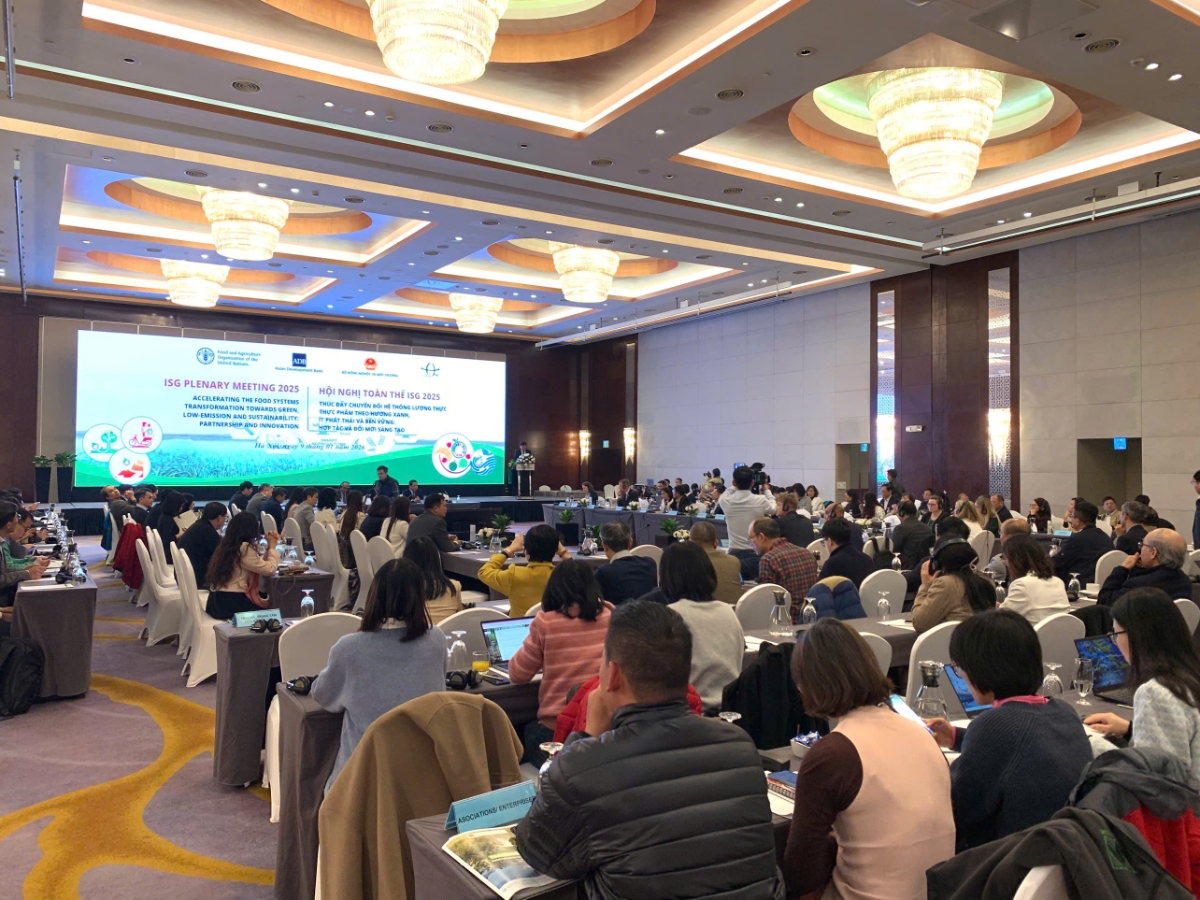
One key focus of the conference was soil health management. According to the FAO, Vietnam is among the top 20 countries in the world for fertilizer use; soil degradation is becoming increasingly serious due to intensive farming and excessive chemical use.
Based on this reality, Associate Professor Dr. Tran Minh Tien, Deputy Director of the Vietnam Academy of Agricultural Sciences, proposed building a national soil and crop database, applying precision agriculture technology, and deploying new generation agricultural inputs such as slow-release and nano-fertilizers, along with a “soil doctor” model to provide technical support to farmers.
At the same time, Associate Professor Dr. Tran Minh Tien also recommended developing a national strategy for soil health management and issuing specific regulations for sloping land cultivation, considering soil health as a national asset that needs long-term protection and investment.
LOOKING TOWARDS THE PERIOD 2026-2030
The plenary session took place on the afternoon of January 9, 2026, co-chaired by Mr. Tran Duc Thang – Minister of Agriculture and Environment; Mr. Shantanu Chakraborty – Director of the Asian Development Bank in Vietnam; and Mr. Vinod Ahuja – FAO Representative in Vietnam.
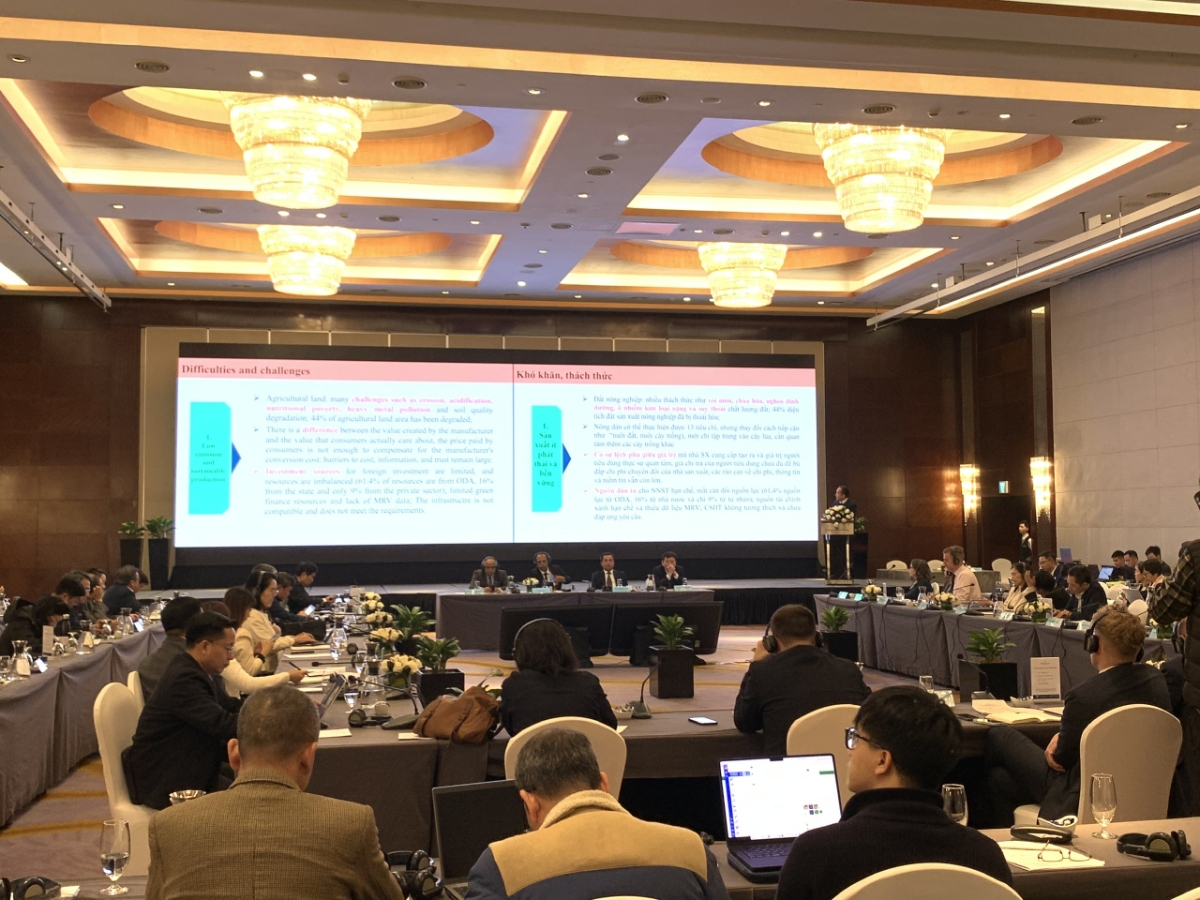
Speaking at the conference, Minister of Agriculture and Environment Tran Duc Thang emphasized that Vietnam has only about 10.3 million hectares of agricultural land, while simultaneously facing climate change, resource degradation, and increasing environmental pressure. Therefore, a prosperous agriculture is impossible if nature is not protected. Transforming the food system towards green, low-emission, and sustainable practices is no longer an option but an inevitable path.
According to the Minister, this transformation aims not only to achieve climate goals but also to ensure food security, nutrition, rural livelihoods, and the long-term competitiveness of Vietnamese agriculture in the context of increasingly stringent global market standards.
The conference agreed on many cooperation directions for the 2026-2030 period, focusing on low-emission production, responsible consumption, innovation, and food system governance. Within the framework of the conference, the “Food System Transformation Partnership” agreement was expanded with two new partners, bringing the total to 49 partners.
On this occasion, FAO also launched the “International Year of Women in Agriculture 2026”, emphasizing the role of women in building comprehensive and sustainable food systems.
Source Chu Khôi VnEconomy tại đây